

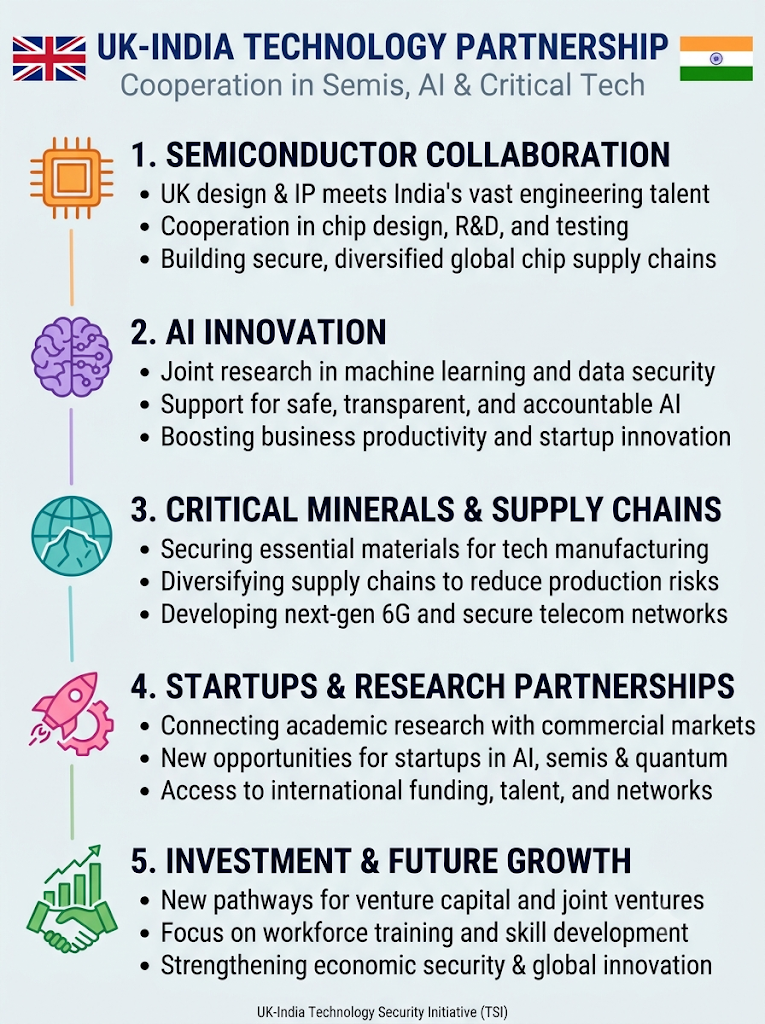
The UK-India Technology Partnership is creating new opportunities for businesses, technology companies and research institutions as both countries look to strengthen their positions in the global semiconductor and artificial intelligence (AI) industries. With rising demand for advanced chips, growing AI adoption and increasing concerns over supply chain disruptions, collaboration between the two economies could play an important role in shaping the next phase of global technology development.
For India, the partnership offers access to advanced research, specialised semiconductor expertise and international innovation networks. The UK, meanwhile, can benefit from India’s expanding technology sector, engineering talent and growing electronics manufacturing ecosystem. Together, the two countries are exploring ways to strengthen technological capabilities, encourage investment and create more reliable supply chains.
At the centre of this cooperation is the UK-India Technology Security Initiative (TSI), which focuses on critical and emerging technologies, including semiconductors, artificial intelligence, telecommunications and critical minerals. Beyond government-level cooperation, the initiative creates opportunities for businesses and startups to participate in research, technology development and cross-border innovation.
Semiconductor Collaboration Opens New Opportunities for Businesses
Semiconductors have become the backbone of modern economic activity, powering everything from smartphones and electric vehicles to industrial machinery, telecommunications networks and advanced computing systems. As global demand for chips increases, countries are placing greater emphasis on developing secure and diversified semiconductor supply chains.
The UK and India bring different but complementary strengths to this industry. The UK has established expertise in advanced chip design, semiconductor research, intellectual property and silicon photonics. India offers a large pool of engineering professionals, strong VLSI design capabilities and a rapidly developing electronics manufacturing sector.
Combining these capabilities could create opportunities in chip design, research and development, testing and specialised semiconductor applications. Instead of attempting to develop every stage of production independently, both countries can build complementary strengths and establish stronger connections across the semiconductor value chain.
For Indian technology companies and startups, this collaboration could provide access to international research facilities, technical knowledge and new business networks. British semiconductor firms could also benefit from India’s skilled workforce and expanding market for electronics and digital technologies.
AI Innovation Could Strengthen the Technology Ecosystem
Artificial intelligence is another major area shaping the India-UK technology collaboration. From manufacturing and financial services to healthcare, logistics and customer management, AI is increasingly influencing how businesses operate and compete.
Both countries have an opportunity to work together on AI research, commercial applications and responsible technology development. Areas such as machine learning, data security, algorithmic transparency and human-centric AI are particularly important as organisations move from experimental AI adoption towards large-scale business implementation.
India’s Centre for Responsible AI at IIT Madras reflects the growing emphasis on developing AI systems that are safe, transparent and accountable. Such initiatives can support research into algorithmic bias, responsible automation and the wider social and economic implications of emerging technologies.
For businesses, stronger AI cooperation could encourage the development of practical solutions that improve productivity, reduce operational costs and support better decision-making. Startups could gain from research partnerships and access to international expertise, while established companies could explore joint product development and commercial applications.
Critical Minerals and Secure Supply Chains Gain Importance
A competitive semiconductor industry requires more than advanced technology. It also depends on reliable access to critical minerals, specialised materials, manufacturing equipment and efficient logistics networks.
Disruptions in these areas can increase production costs, delay manufacturing and expose businesses to significant supply risks. This makes supply chain diversification an important priority for both India and the UK.
Through closer cooperation, the two countries can explore opportunities in critical mineral sourcing, supply chain mapping, resource development and technological research. Better coordination could help businesses identify potential vulnerabilities and develop more reliable sourcing strategies.
Telecommunications security is another important part of this relationship. Collaboration in Open Radio Access Network (Open RAN) technology and next-generation 6G research could support the development of secure and flexible digital infrastructure.
As businesses become more dependent on connected devices, cloud computing and real-time data, reliable telecommunications networks will be essential for the expansion of AI, smart manufacturing and other technology-driven industries.
Research and Startup Partnerships Can Turn Ideas Into Businesses
One of the biggest opportunities within the UK-India Technology Partnership lies in connecting academic research with commercial development.
Universities, research institutions, incubators and technology companies in both countries can work together to develop new products, improve existing technologies and bring research breakthroughs closer to the marketplace.
For startups, international research partnerships can provide access to specialised expertise, technical facilities, potential investors and wider commercial networks. These advantages are particularly valuable for young businesses working in semiconductor design, AI applications, cybersecurity and advanced materials.
Small and medium-sized technology companies could also benefit from joint innovation programmes and opportunities to participate in international supply chains. Stronger connections between research institutions and industry can help reduce development barriers and improve the commercial viability of new technologies.
The benefits could extend into quantum technology, biotechnology, advanced materials and next-generation telecommunications, creating a wider range of opportunities for businesses on both sides.
What the UK-India Technology Partnership Means for Investors
The growing technology relationship could open new investment opportunities across the semiconductor and AI ecosystems.
Semiconductor companies may find opportunities in chip design, specialised components and research collaborations. Electronics manufacturers could benefit from stronger technical capabilities and diversified sourcing networks. AI startups may gain access to international expertise, research partnerships and new customer markets.
There is also considerable scope for investment in technology education and workforce development. Both industries require specialised professionals, making industry-linked training, university partnerships and technical skill development important to long-term growth.
However, the commercial success of these initiatives will depend on effective policy implementation, sustained research funding, intellectual property protection and stronger private-sector participation. Businesses will need clear investment frameworks and practical opportunities to convert collaborative research into market-ready products.
UK-India Technology Partnership Could Shape the Next Phase of Global Innovation
The growing UK-India Technology Partnership reflects a broader shift in how countries are approaching technological development and economic security. As semiconductor demand increases and artificial intelligence becomes central to business competitiveness, international cooperation will play a greater role in building reliable supply chains and accelerating innovation.
For India, the relationship offers an opportunity to strengthen its semiconductor ambitions, expand its AI ecosystem and create new opportunities for technology businesses. For the UK, closer engagement with India’s engineering talent, manufacturing capabilities and growing digital economy can support wider commercial and research objectives.
The real opportunity lies in turning cooperation into tangible business outcomes through joint research, technology investment, startup participation and industrial development. If both countries maintain their focus on implementation and private-sector engagement, their partnership could strengthen global semiconductor and AI supply chains while creating a more competitive environment for businesses, innovators and investors.

Leave a Reply