

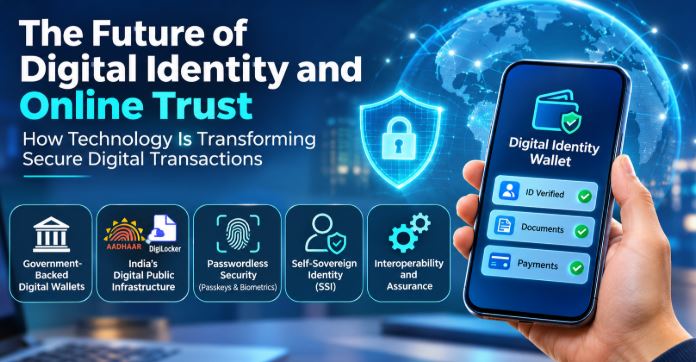
In today’s connected world, almost every activity involves sharing personal information online. From opening a bank account and making payments to accessing government services and shopping online, digital identity has become an important part of everyday life.
However, the growing use of digital platforms has also increased concerns about data privacy, identity theft and cybercrime. Traditional password-based systems are no longer sufficient to address these challenges. This is driving a major shift towards secure digital identity solutions that offer stronger authentication, greater privacy and reliable verification.
Digital identity is no longer just about storing personal information electronically. It is becoming a foundation for building trust between individuals, businesses, financial institutions and governments.
Digital Identity Wallets Are Changing the Way We Verify Ourselves
One of the most significant developments in digital identity is the introduction of government-backed digital identity wallets.
The European Union is advancing its European Digital Identity Wallet initiative, while Singapore’s Singpass platform continues to expand digital access to public and private services. Australia is also strengthening its digital identity framework.
These systems aim to make identity verification easier, more secure and convenient. Instead of repeatedly submitting physical documents, users can present verified digital credentials when accessing services.
Such developments could also support cross-border transactions by making digital identity credentials more widely accepted.
India’s Digital Public Infrastructure Sets an Example
India has made considerable progress in building a large-scale digital ecosystem through its Digital Public Infrastructure (DPI).
Aadhaar has simplified identity verification, while DigiLocker allows citizens to securely access and share digital documents. Together with other digital services, these platforms have helped improve access to banking, government services and online transactions.
India’s experience demonstrates how digital identity infrastructure can support financial inclusion, reduce paperwork and make public services more accessible.
Passwordless Authentication: A Stronger Defence Against Cybercrime
Passwords have long been the primary method of protecting online accounts. However, weak passwords, phishing attacks and credential theft have exposed their limitations.
New authentication technologies are changing this approach. Passkeys, fingerprint recognition, facial authentication and hardware-backed security are helping users access digital services without relying entirely on traditional passwords.
These technologies can reduce the risks associated with stolen credentials and make online transactions more secure. As adoption increases, passwordless authentication is expected to become an important part of digital security.
Self-Sovereign Identity: Giving Users Greater Control Over Personal Data
Privacy is another major concern in the future of digital identity.
Self-Sovereign Identity (SSI) is an emerging approach that gives individuals greater control over their digital credentials and personal information. It allows users to share only the information required for a particular service.
For example, someone may need to prove that they are above 18 years of age without revealing their complete date of birth or other personal details.
This approach, supported by privacy-enhancing technologies such as verifiable credentials and zero-knowledge proofs, could help reduce unnecessary data sharing and improve online privacy.
Why Interoperability Matters for Global Digital Transactions
A secure digital identity system must work beyond a single platform or country. Interoperability is therefore becoming a major priority for governments, financial institutions and technology providers.
Digital credentials should be recognised across different services while maintaining consistent security and privacy standards.
As highlighted in discussions on digital trust by LSEG Risk Intelligence, the challenge is no longer simply encouraging digital identity adoption. It is ensuring that identity systems can work together reliably and meet appropriate standards of assurance.
Better interoperability could make international banking, business transactions and digital services more convenient while reducing identity verification challenges.
Challenges That Cannot Be Ignored
Despite its potential, digital identity technology still faces several challenges. Data breaches, cyberattacks, misuse of personal information and unequal access to digital services remain important concerns.
Governments and organisations must establish strong data protection policies, transparent verification processes and effective cybersecurity measures.
Digital identity systems must also remain accessible to people with limited digital literacy or internet connectivity. Technology should make identity verification easier for everyone, not create additional barriers.
Conclusion
The future of digital identity will be shaped by secure authentication, privacy-focused technology and international cooperation. Digital wallets, biometric verification, passkeys and self-sovereign identity could transform how people access services and conduct online transactions.
For businesses, stronger digital identity systems can help reduce fraud, improve customer verification and build confidence in digital services. For individuals, they offer the possibility of greater control over personal information and safer online experiences.
Ultimately, digital trust will become one of the most valuable foundations of the digital economy. The success of these technologies will depend not only on innovation but also on how effectively they protect people’s identities, privacy and rights.
The real measure of a successful digital identity system will not simply be how quickly it verifies a person, but how securely and responsibly it earns their trust.

Leave a Reply