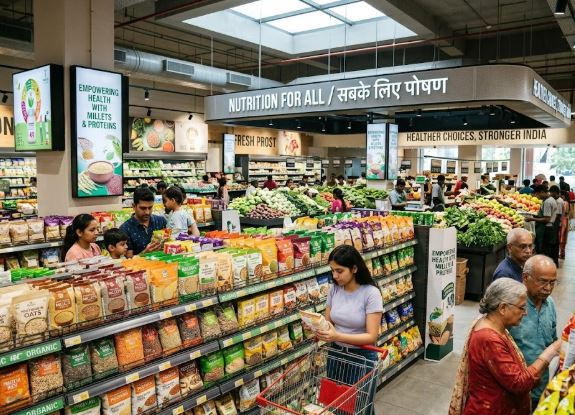

India’s food industry is entering a period of change as consumers, businesses and policymakers pay greater attention to the relationship between diet and health. India’s nutrition challenge extends beyond hunger, with undernutrition and micronutrient deficiencies continuing to affect vulnerable communities while obesity, diabetes and other lifestyle-related conditions are becoming growing concerns. This shift is creating new opportunities for food manufacturers, startups and retailers to develop products that combine nutritional value, affordability and convenience.
The challenge is significant because access to sufficient food does not always translate into a balanced diet. Many households continue to face difficulties obtaining a diverse range of nutritious foods, while the growing availability of heavily processed products has changed eating habits in many parts of the country. As a result, improving nutrition requires attention not only to food production but also to product quality, household purchasing power and consumer awareness.
For businesses, this changing environment is opening up opportunities across food processing, packaged foods, agricultural supply chains and health-focused product development.
India’s Nutrition Problem Goes Beyond Food Availability
India continues to face multiple forms of malnutrition. Childhood undernutrition, anaemia and deficiencies in essential vitamins and minerals remain important public health concerns. At the same time, changing diets and increasingly sedentary lifestyles are contributing to rising concerns about overweight, obesity and chronic diseases.
These problems often have different causes, but they can exist side by side. A person may consume enough calories while still lacking essential nutrients, while another may struggle to obtain sufficient food overall. Income, food prices, local availability, working conditions and awareness of balanced diets all influence what people eat.
This makes nutrition a broader economic and social issue. Healthier diets need to be accessible to households with different incomes, not just consumers who can afford premium food products.
For the food industry, the implication is clear: future growth will depend partly on the ability to meet diverse nutritional needs while keeping products practical and affordable.
Healthier Food Choices Create New Business Opportunities
Growing awareness of diet-related health concerns is encouraging food companies to explore products that offer greater nutritional value. Millet-based foods, pulse-based snacks, plant proteins, fortified staples and products with reduced levels of sugar or salt are among the categories attracting attention.
Millets, in particular, offer opportunities to connect India’s agricultural strengths with changing consumer preferences. They can be used in breakfast mixes, packaged snacks, flour blends and ready-to-cook products. Similarly, pulses and other plant-based ingredients can support the development of convenient foods with useful protein content.
However, launching a product with a health-focused message is not enough to guarantee commercial success. Consumers still consider taste, price, availability and convenience when making purchasing decisions. Businesses must therefore ensure that nutritional improvements are supported by sound product development and consistent quality.
Affordable pricing will be especially important if healthier products are to reach beyond premium urban markets.
Food Manufacturers Face Pressure to Improve Product Quality
The growing focus on nutrition is also influencing how packaged foods are developed and marketed. Manufacturers are increasingly being encouraged to examine the sugar, salt, fat and overall nutritional composition of their products.
Reformulation can help companies respond to these expectations by reducing excess ingredients or improving a product’s nutritional profile. However, changing recipes requires careful planning because ingredients also affect taste, texture, shelf life and production costs.
Clear nutrition labels are another important part of this shift. Consumers need reliable information to compare products and understand what they are buying. Food businesses must ensure that their packaging, nutrition claims and advertising comply with applicable food safety and labelling requirements.
For companies, transparency can support consumer confidence and help establish long-term brand credibility. Businesses that communicate clearly and deliver on their product promises may be better placed to build lasting customer relationships.
Opportunities for MSMEs, Startups and Local Producers
India’s nutrition needs create opportunities for smaller businesses that understand local food habits and regional markets. Micro, small and medium enterprises can develop products using locally available grains, pulses, nuts and other agricultural ingredients, creating links between farmers, processors and retailers.
Potential business areas include millet processing, nutritious snack manufacturing, food fortification where appropriate, improved packaging and convenient meal products. Startups may also find opportunities in digital distribution, specialised food categories and supply-chain technology.
Yet smaller businesses must manage several practical challenges, including raw material price fluctuations, food safety compliance, packaging costs, distribution and competition from established brands.
Access to reliable suppliers and consistent production standards will be essential. Businesses must also demonstrate that their products offer genuine value rather than relying solely on health-related marketing.
When these conditions are met, nutrition-focused food production can support business growth while creating additional demand for agricultural products and local processing services.
Better Supply Chains Can Make Nutritious Food More Accessible
The availability of nutritious food depends on more than production. Storage facilities, transportation, processing capacity and distribution networks influence how much food reaches consumers and at what price.
Perishable foods can be particularly vulnerable to inadequate storage and transportation delays. Losses along the supply chain can increase costs for businesses and make some products less affordable for households.
Investments in improved storage, food processing, packaging and demand forecasting can help businesses manage these challenges. More efficient supply chains can reduce waste, improve product availability and support more consistent deliveries.
For farmers, stronger connections with processors and retailers may provide access to wider markets. For food businesses, reliable sourcing can improve production planning and reduce the risk of shortages.
These improvements are important to the nutrition economy because healthier food choices become meaningful only when consumers can access them regularly and at reasonable prices.
Collaboration Will Be Important for Long-Term Progress
India’s nutrition challenge cannot be solved by food companies alone. Public health programmes, agricultural policies, household incomes, healthcare access and nutrition education all influence dietary outcomes.
Government agencies, manufacturers, retailers, farmers and research institutions can contribute by improving food quality, supporting responsible product development and increasing access to nutritious options.
Initiatives such as the Food Safety and Standards Authority of India’s Eat Right India movement also underline the importance of food safety, informed choices and healthier eating habits.
For businesses, collaboration can help improve standards and identify products that meet genuine consumer needs. For policymakers, engagement with the food industry can support innovation while maintaining public health priorities.
The goal should be to create a market in which healthier products are not limited to a small group of consumers but become increasingly accessible across income groups and regions.
Conclusion
India’s nutrition challenge is changing the priorities of the food industry, creating a stronger need for products that balance nutritional quality, affordability and convenience. From millet-based foods and plant proteins to improved food processing and transparent labelling, businesses have opportunities to respond to changing consumer expectations while supporting wider public health goals.
However, long-term progress will depend on more than launching new products. Food companies must maintain quality, communicate honestly, manage costs and ensure that healthier options are accessible to the people who need them.
As India’s food economy evolves, businesses that combine commercial discipline with a genuine understanding of nutrition needs can help build a more responsible and inclusive food market. The opportunity lies in making better food choices easier for consumers while creating sustainable growth across agriculture, manufacturing and retail.