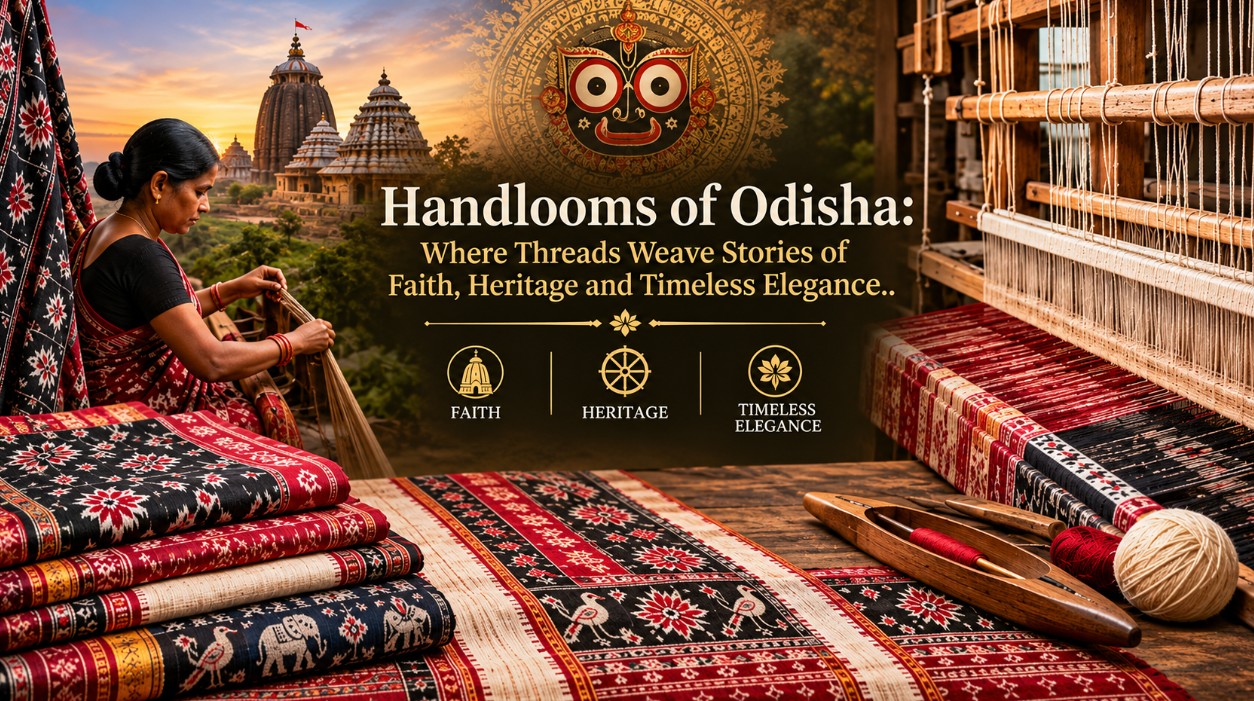

From the intricate ikat patterns of Sambalpur to the earthy elegance of Kotpad and the sacred silk traditions of Khandua, Odisha’s handlooms are more than exquisite textiles. They are living expressions of the state’s history, spirituality, artistic imagination and generations of weaving wisdom.
There is something extraordinary about a piece of handwoven fabric that carries the imprint of an entire civilisation. In Odisha, a saree is rarely just a garment. It is a canvas of cultural memory, a reflection of devotion, a celebration of nature and, above all, a testament to the extraordinary skill of generations of weavers.
For centuries, the looms of Odisha have transformed cotton, silk and tussar into textiles that tell stories without words. Temple architecture, sacred symbols, folk traditions, tribal influences and the rhythms of everyday life find expression in their intricate patterns. Every motif has a meaning, every colour carries an identity and every carefully interlaced thread reflects the patience and precision of the artisan.
Widely admired for their distinctive patterns and traditional craftsmanship, Odisha’s handlooms occupy a special place in India’s textile heritage. From the internationally recognised Sambalpuri ikat to the spiritually significant Khandua, the region’s diverse weaving traditions reveal a remarkable combination of artistic creativity, mathematical precision and cultural continuity.
The Art of Bandha: Where Mathematics Meets Master Craftsmanship
At the heart of Odisha’s celebrated weaving heritage lies Bandha, the traditional resist-dyeing technique popularly known as ikat. Unlike conventional weaving, where designs are created through the interlacing of coloured threads on the loom, Bandha requires artisans to visualise the finished pattern even before the fabric comes into existence.
The process begins with carefully measuring and arranging the yarn. Selected sections of the threads are tightly tied with protective material to prevent them from absorbing colour during dyeing. The yarn is then dyed, dried and untied before the process is repeated wherever multiple colours are required. Once the desired patterns have been created on the threads, they are meticulously arranged on the loom.
The real challenge lies in aligning the dyed sections of the yarn so that the intended design emerges accurately during weaving. Even a slight miscalculation can disturb the pattern. It requires an extraordinary understanding of geometry, proportion, colour placement and spatial imagination.
In Odisha, Bandha is practised in both warp and weft forms, as well as in combinations of the two. In the finished textile, the characteristic ikat pattern can be seen on both sides, although its appearance may vary depending on the weave and design.
Some patterns are geometric, while others depict flowers, animals, religious symbols and elaborate traditional compositions. Among the distinctive design variations are Hazar Buti, featuring numerous small motifs, and Nabakothi, associated with nine-part grid arrangements.
What makes Bandha particularly fascinating is that the weaver does not simply reproduce a design. The artisan must mentally calculate how individual threads will come together to create a larger visual composition. It is an art form where mathematical precision meets creative instinct.
Signature Handlooms That Define Odisha’s Cultural Identity
Odisha’s handloom landscape is remarkably diverse. Each weaving centre has developed its own identity through its choice of yarn, dyeing methods, motifs, colour combinations and weaving techniques. Together, these traditions form an extraordinary textile map of the state.
1. Sambalpuri Bandha: The Pride of Western Odisha
Among Odisha’s most celebrated textile traditions, Sambalpuri Bandha holds a distinctive position. Originating in western Odisha, particularly the weaving centres of Sambalpur, Bargarh, Sonepur, Balangir and adjoining regions, this iconic handloom is renowned for its intricate ikat patterns.
The sarees are woven in cotton and silk, with designs created through the painstaking tie-and-dye process. Traditional motifs such as Shankha (conch), Chakra (wheel), Phula (flower), birds, animals and floral arrangements are frequently incorporated into the fabric.
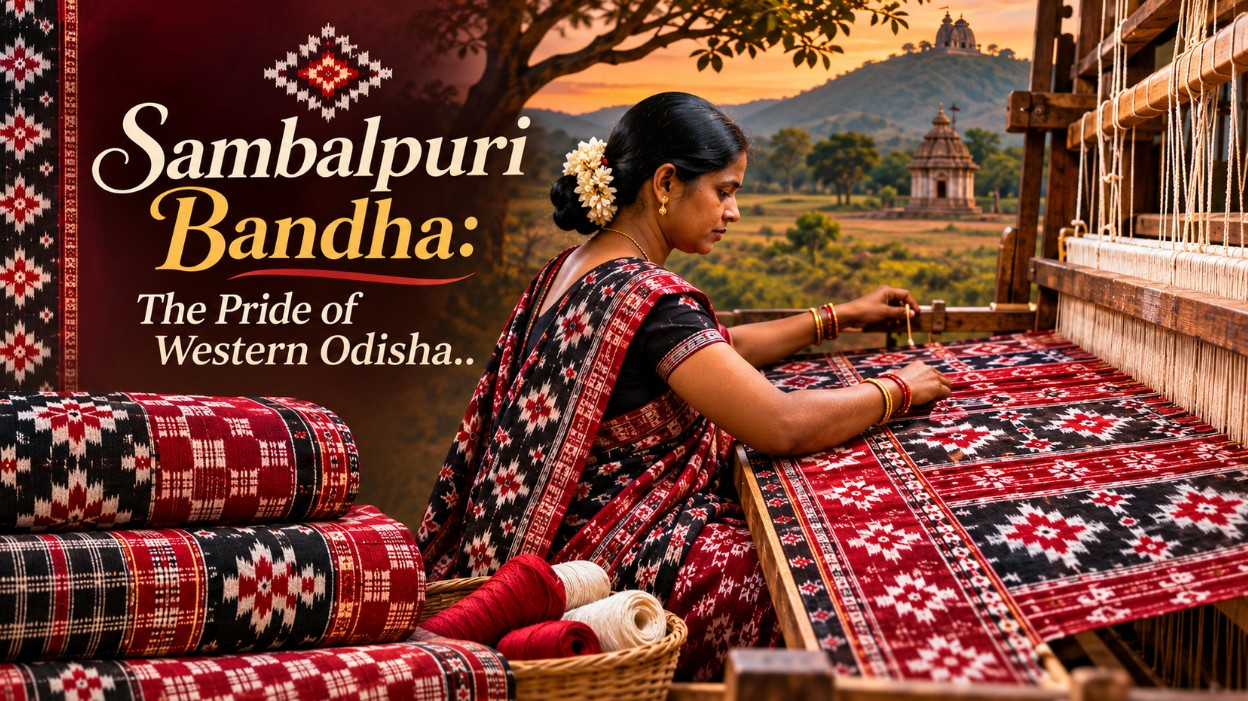
Representational Image
The familiar combination of red, black and white, along with other vibrant shades, gives many Sambalpuri sarees their striking visual identity. These colours and motifs often reflect the religious and cultural associations of the region, including the traditions surrounding Lord Jagannath.
A Sambalpuri saree is equally admired for its elaborate borders and beautifully patterned anchal or pallu. Its popularity extends beyond Odisha, finding admirers among textile enthusiasts, designers and saree collectors across India and abroad.
The Sambalpuri handloom tradition has received Geographical Indication (GI) recognition, strengthening its identity and association with its traditional place of origin.
2. Khandua Pata: A Sacred Connection with Lord Jagannath
Few textiles of Odisha possess the spiritual significance of Khandua Pata. Traditionally associated with Nuapatna in Cuttack district and the wider Maniabandha weaving tradition, Khandua is closely connected with the religious culture of Odisha.
Its association with Lord Jagannath makes it particularly special. The fabric has traditionally been used in religious offerings and ceremonial practices, and its designs reflect the state’s deep-rooted devotional traditions.
One of the most distinctive features of Khandua is the inclusion of verses from the Gita Govinda, the celebrated Sanskrit composition by Jayadeva. These verses, woven into the fabric, transform the saree into a remarkable expression of art and spirituality.

Representational Image
Traditionally woven in silk and cotton, Khandua textiles are admired for their rich colours, delicate patterns and carefully designed borders. The weaving process demands exceptional concentration, particularly when incorporating intricate text and motifs.
The tradition is also associated with the history of Odisha’s GI-protected handloom heritage, with Khandua receiving GI recognition in 2005.
3. Bomkai: A Meeting of Ikat and Tribal Art
Bomkai, also known as Sonepuri saree, is another celebrated contribution to Odisha’s textile heritage. Traditionally associated with the Ganjam and Subarnapur regions, it represents a fascinating combination of weaving techniques and artistic influences.
What distinguishes Bomkai is its elaborate border and pallu, often enriched with supplementary-weft patterns that resemble embroidery. The designs draw inspiration from tribal life, nature, mythology and traditional symbols.
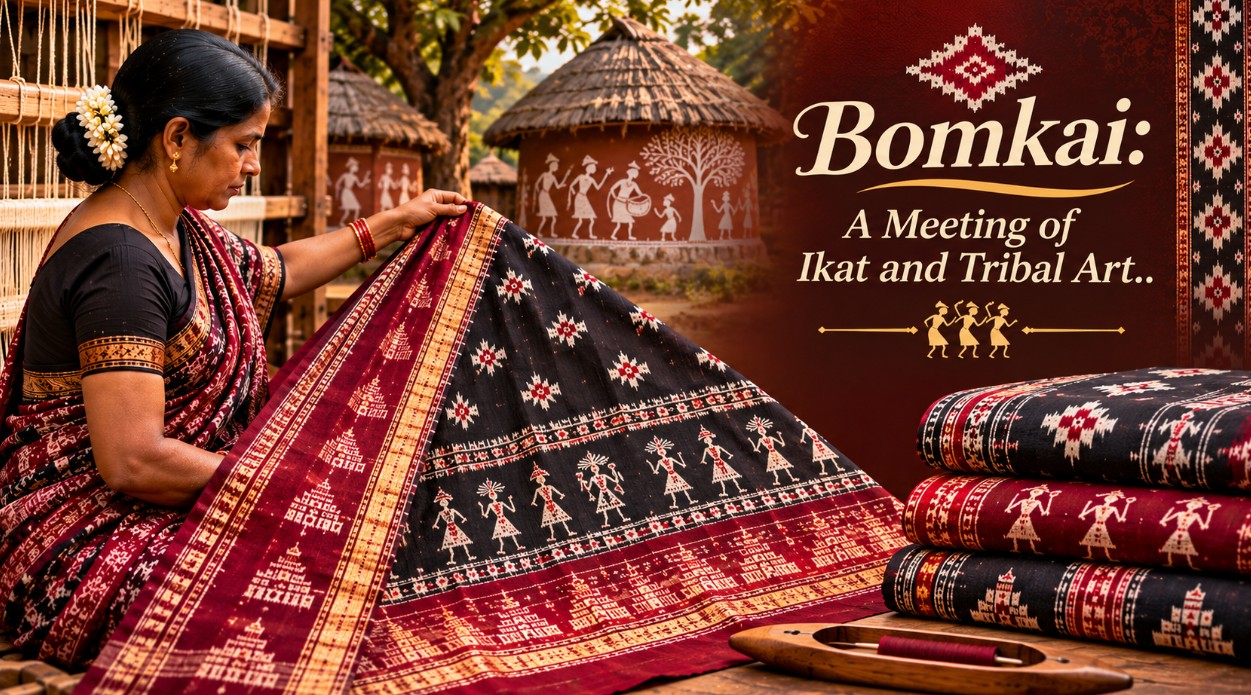
Representational Image
Motifs of birds, flowers, animals, fish and other decorative elements lend the saree a distinctive character. The interplay of intricate patterns and contrasting colours creates a rich visual effect.
Bomkai is woven in both cotton and silk. While cotton versions are popular for everyday and festive wear, silk Bomkai sarees are particularly sought after for weddings and special occasions.
Its appeal lies in the balance between traditional simplicity and elaborate craftsmanship. It is a textile that preserves the artistic vocabulary of Odisha while remaining relevant to contemporary fashion.
4. Pasapalli: The Beauty of Geometric Precision
Pasapalli sarees are instantly recognisable for their bold checks and striking geometric patterns. The name is derived from Pasa, a traditional dice-based board game, and the design reflects the appearance of a chessboard-like grid.
Originating in western Odisha, Pasapalli is closely associated with the region’s ikat weaving traditions. The characteristic squares are created through carefully planned tie-and-dye arrangements, requiring considerable skill and precision.
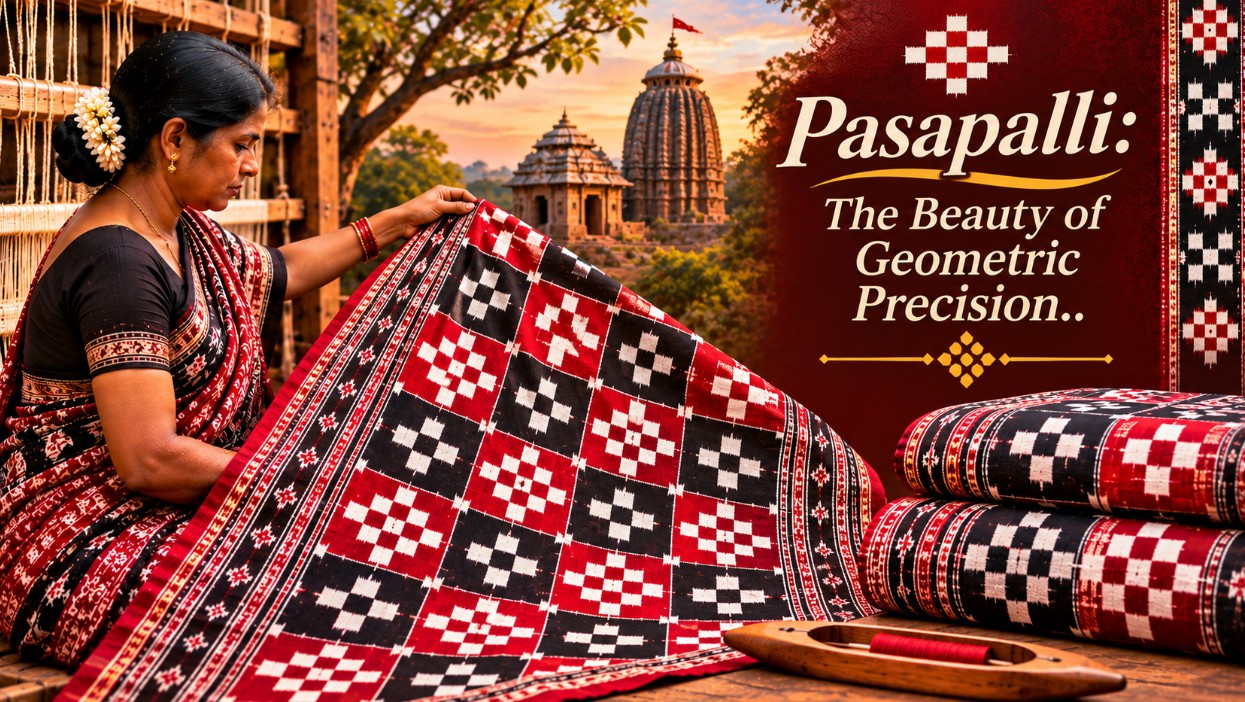
Representational Image
The geometric patterns may be presented in contrasting colours, with intricate detailing and traditional motifs adding further richness to the fabric.
What appears to be a simple arrangement of squares is actually the result of complex calculations and meticulous planning. Each section must align correctly during weaving to create the distinctive checks.
The elegance of Pasapalli lies in its ability to turn geometry into wearable art. Its bold patterns make it a favourite among those who appreciate traditional craftsmanship with a contemporary visual appeal.
5. Berhampuri Pata: The Regal Silk of Ganjam
From the southern districts of Odisha comes Berhampuri Pata, a traditional silk textile associated with Berhampur in Ganjam district.
Often admired for its rich texture, distinctive borders and traditional craftsmanship, Berhampuri Pata has a special place among Odisha’s ceremonial textiles.

Representational Image
Its most recognisable design feature is the Phoda Kumbha border, inspired by the architectural elements of temple structures. The elaborate border gives the saree a regal appearance and reflects the close relationship between Odisha’s textile traditions and its temple architecture.
Woven primarily in silk, Berhampuri Pata is valued for its lustrous finish and traditional aesthetic. Its elegance makes it suitable for religious ceremonies, festive occasions and formal celebrations.
The textile represents another dimension of Odisha’s weaving heritage, where architectural inspiration is translated into intricate fabric design.
6. Kotpad: The Earthy Elegance of Natural Dyes
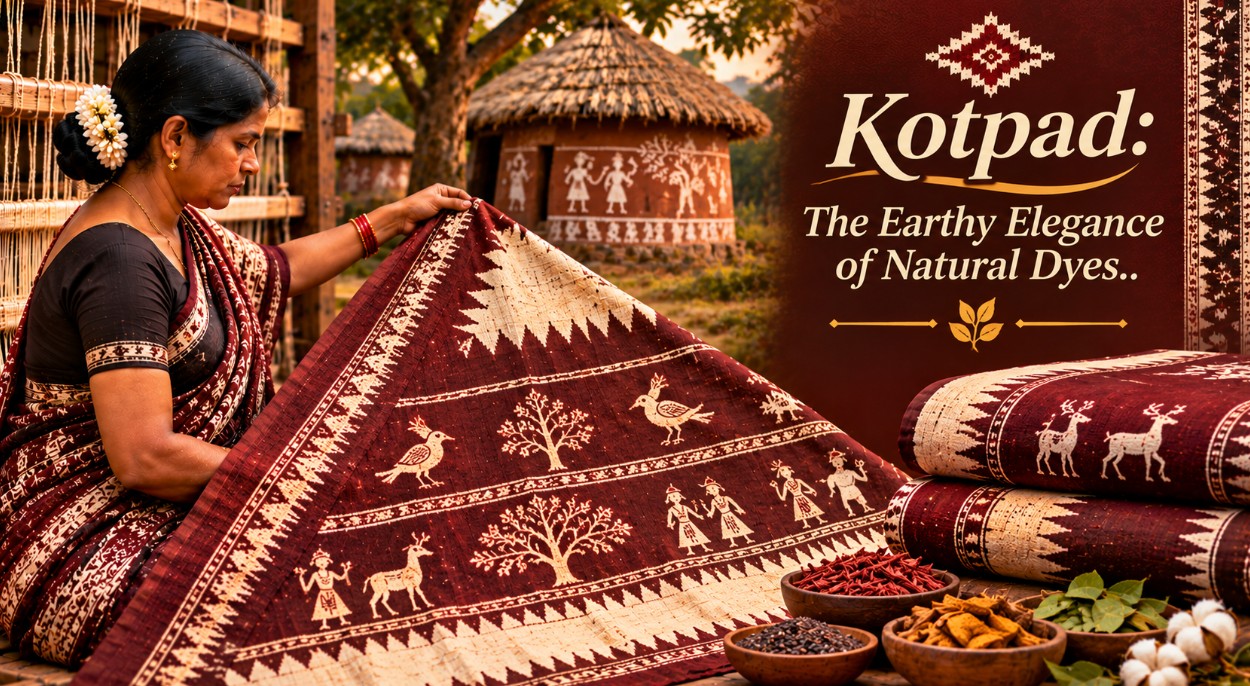
In the tribal heartland of Koraput district, Kotpad handloom represents a remarkable relationship between traditional weaving and nature.
Closely associated with the Mirgan weaving community, Kotpad textiles are known for their use of organic cotton and natural vegetable dyes. One of the most important dye sources is the root of the Aal tree, which produces the characteristic earthy shades associated with this textile tradition.
The resulting colours range from muted maroon and deep red to brown and other subdued tones. Unlike brightly coloured contemporary fabrics, Kotpad textiles possess an understated elegance that comes from their natural palette.
Representational Image
Its motifs are equally distinctive. Designs inspired by fish, animals, agricultural tools, tribal life and traditional symbols reflect the cultural environment of the region.
Kotpad is among Odisha’s recognised GI-protected textile traditions. Its significance extends beyond aesthetics, representing indigenous knowledge, sustainable dyeing practices and the livelihood of traditional weaving communities.
In an age when consumers are increasingly interested in natural materials and environmentally conscious fashion, Kotpad offers a meaningful connection between heritage and sustainability.
7. Habaspuri: A Traditional Weave Reborn
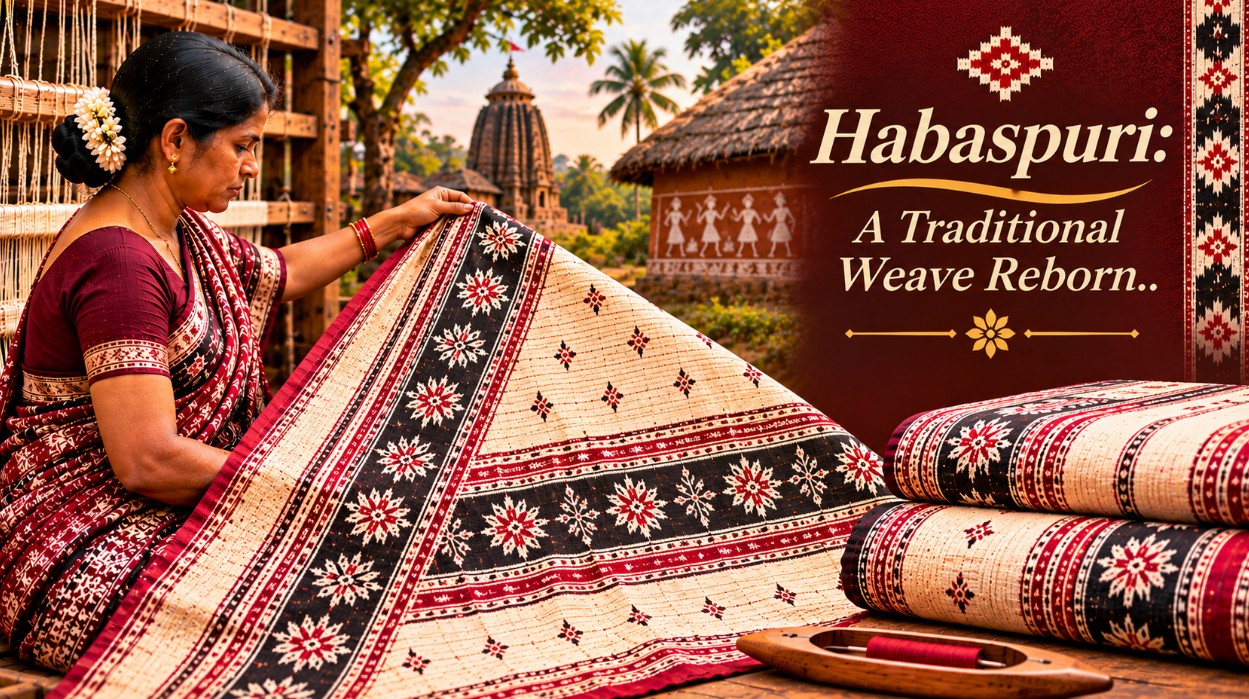
Habaspuri sarees originate from Kalahandi district and are an important part of Odisha’s regional weaving identity.
Traditionally woven using cotton, these sarees are known for their distinctive motifs and comfortable texture. Designs inspired by temple architecture, flowers, fish and traditional symbols give them a recognisable character.
The Kumbha motif, associated with temple architecture, is among the decorative elements found in this weaving tradition.
Representational Image
Like several regional handlooms, Habaspuri experienced a period of decline as changing consumer preferences and the increasing dominance of machine-made textiles affected traditional weaving livelihoods.
However, revival efforts by local artisans, weaving organisations and supporting institutions have helped bring renewed attention to this distinctive craft.
Its GI recognition has further strengthened the identity of Habaspuri and highlighted the importance of preserving the weaving knowledge of Kalahandi.
Lightweight, elegant and rooted in regional aesthetics, Habaspuri sarees represent the resilience of Odisha’s traditional textile communities.
8. Gopalpur Tussar: The Subtle Charm of Natural Silk
Gopalpur in Jajpur district is known for its distinctive tussar silk weaving tradition.
Tussar silk is appreciated for its natural texture, warm golden sheen and understated elegance. Unlike the glossy finish of some conventional silk varieties, tussar has a characteristic matte appearance that gives it a sophisticated, earthy charm.

Representational Image
Gopalpur textiles often incorporate Bandha-inspired tie-and-dye patterns, creating an attractive combination of natural silk tones and intricate designs.
The fabric’s breathable feel and natural texture make it an appealing choice for those who prefer understated traditional clothing. Its muted elegance also allows it to transition easily between formal, festive and everyday occasions.
The tradition reflects the versatility of Odisha’s textile artisans, who have adapted distinctive regional techniques to different varieties of silk.
9. Dolabedi: A Celebration of Festival and Tradition
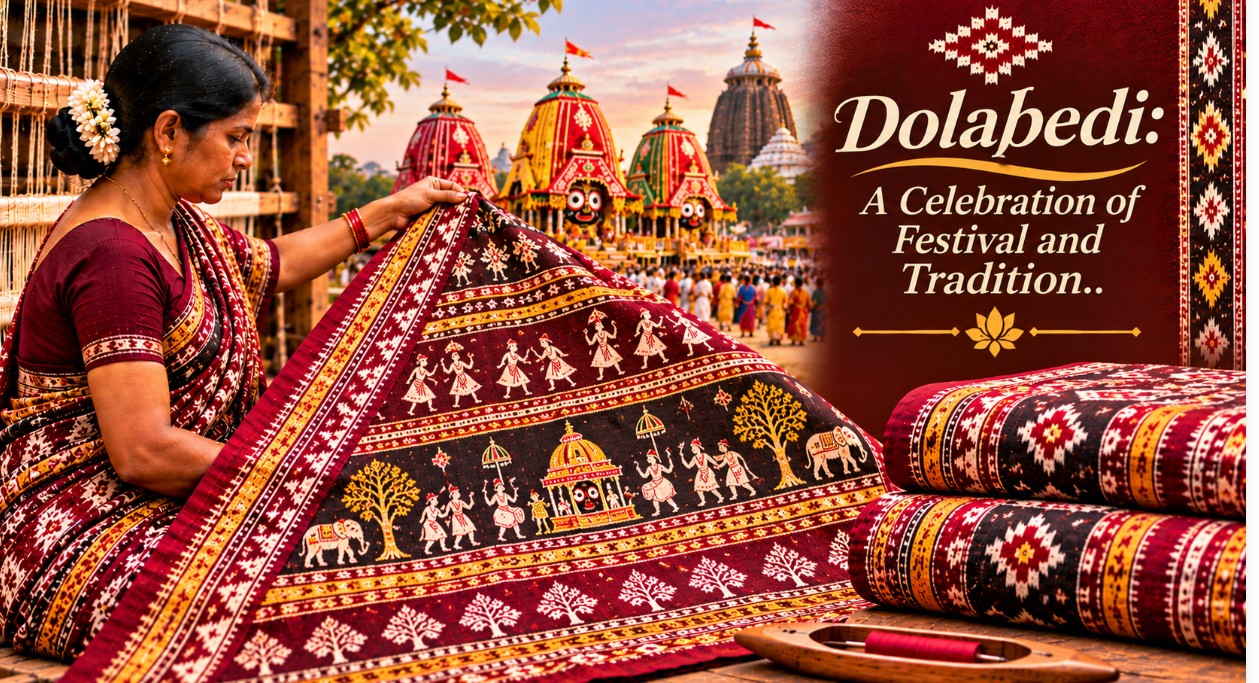
Dolabedi is associated with the cultural and religious traditions surrounding the Dola festival in Odisha.
The name evokes the festive atmosphere of the celebrations, which are closely connected with the worship of Lord Krishna and the region’s broader devotional culture.
Representational Image
Characterised by colourful patterns and traditional ikat influences, Dolabedi textiles reflect the celebratory spirit of Odisha’s religious calendar.
Woven in cotton and silk variations, these textiles incorporate designs inspired by festivals, religious symbolism and traditional aesthetics.
Like many regional weaving traditions, Dolabedi demonstrates how Odisha’s textile heritage is deeply connected with community celebrations and religious practices.
More Than Motifs: The Cultural Language of Odisha’s Sarees
A defining feature of Odisha’s handloom heritage is its ability to communicate through symbols.
The Shankha represents sacredness and auspiciousness, while the Chakra is associated with cosmic order and divine power. The Padma or lotus symbolises purity and spiritual awakening. Fish, birds, flowers and animals reflect the state’s natural surroundings, folklore and everyday life.
Temple-inspired borders and architectural patterns reveal the influence of Odisha’s magnificent religious structures. The intricate motifs found in many sarees are reminders of the state’s long-standing relationship between sculpture, architecture, painting and textile art.
The influence of Lord Jagannath is particularly significant. Religious symbols, traditional colour combinations and devotional expressions have shaped the visual language of several weaving traditions.
These textiles are therefore not merely decorative objects. They are cultural documents that preserve the imagination, beliefs and artistic expressions of communities across generations.
The Weavers Behind the Heritage
Behind every celebrated Odisha saree is a community of skilled artisans whose knowledge has been passed down through generations.
The process of creating a handloom saree is labour-intensive. It involves yarn preparation, dyeing, design planning, setting up the loom, weaving and finishing. In ikat traditions, the complexity begins long before the first thread is woven.
The work requires patience, physical endurance and extraordinary attention to detail. A single intricate design may demand several days or even weeks of preparation and weaving, depending on its complexity.
For many weaving families, the loom is not simply a tool of production. It is an inheritance, a source of livelihood and an essential part of their cultural identity.
However, traditional weavers face several challenges, including rising raw-material costs, competition from power looms, changing market preferences, limited access to organised markets and the difficulty of ensuring fair compensation for labour-intensive craftsmanship.
The future of these traditions depends on creating sustainable economic opportunities for the artisans who preserve them.
GI Recognition and the Need to Protect Authentic Handlooms
Geographical Indication recognition has played an important role in strengthening the identity of Odisha’s traditional textiles. It connects particular products with their geographical origins and the distinctive qualities associated with those regions.
For consumers, however, recognising authentic handloom products remains equally important.
A genuine handwoven saree represents hours of skilled labour and generations of accumulated knowledge. Machine-made imitations may reproduce the appearance of traditional designs, but they cannot fully replicate the human skill and individual character of handcrafted textiles.
Buyers can support authentic weaving by purchasing from recognised handloom cooperatives, artisan groups, credible retailers and authorised platforms. Asking about the weaving technique, yarn and place of origin can also help consumers make informed choices.
Supporting handlooms is not merely a matter of preserving traditional fashion. It is an investment in rural livelihoods, indigenous knowledge and India’s living cultural heritage.
A Heritage That Deserves to Be Woven into the Future
Odisha’s handloom traditions have survived centuries of social change, evolving fashion preferences and economic challenges. Their continued relevance lies in their extraordinary ability to combine heritage with adaptability.
Today, traditional sarees are finding new admirers among younger consumers, designers and textile enthusiasts. Contemporary styling, innovative colour combinations and the use of traditional motifs in modern garments and accessories are opening fresh possibilities for these crafts.
Yet, the true strength of Odisha’s handlooms lies in the preservation of their original techniques and the dignity of the artisans who create them.
From the mathematical precision of Sambalpuri Bandha to the sacred verses of Khandua, from the tribal-inspired artistry of Bomkai to the natural dyes of Kotpad, every weave represents a different chapter in the cultural history of Odisha.
A saree from Odisha does more than drape the wearer in beautiful colours. It carries the memory of a temple, the imagination of an artisan, the wisdom of a community and the rhythm of a loom that has continued to work across generations.
These are not simply fabrics woven for fashion. They are stories woven for posterity.
As long as the hands of Odisha’s weavers continue to move across the loom, the state’s rich textile heritage will remain alive — thread by thread, motif by motif, and generation after generation.