

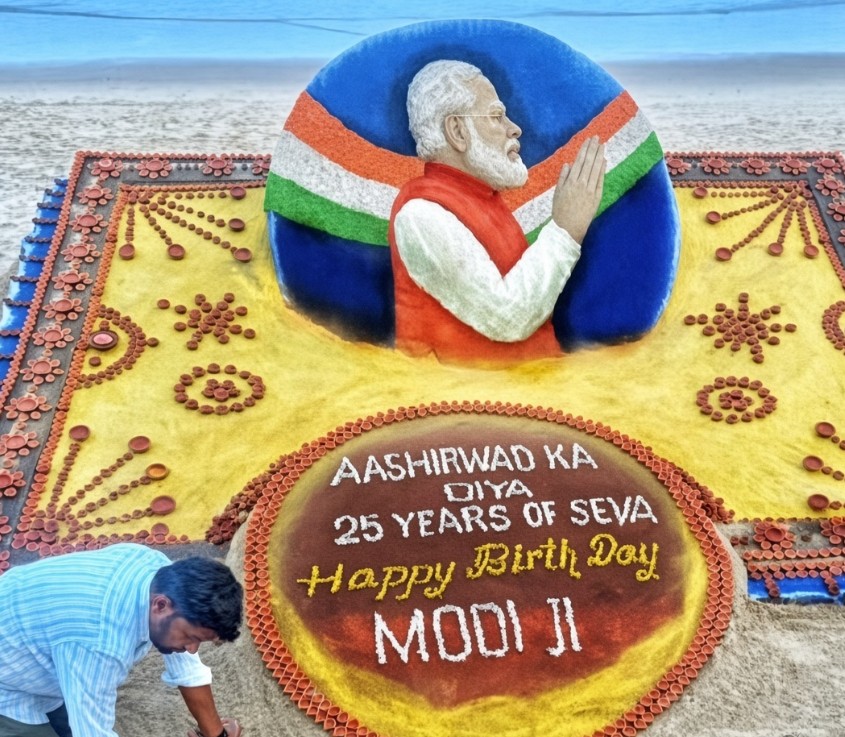
Prime Minister Narendra Modi turns 76 on September 17, with the occasion also marking another milestone in a political career that has spanned more than two decades in public life. As birthday programmes and public outreach activities get underway across the country, the day also provides an opportunity to look at some of the key economic and infrastructure indicators recorded during his tenure as Prime Minister.
India’s economy has expanded significantly over the past decade, while the country has also witnessed major changes in digital payments, infrastructure, financial inclusion, manufacturing and entrepreneurship. The latest data provides a snapshot of the scale of these developments.
India’s real GDP grew 7.8 per cent in the April-June quarter of FY27, with manufacturing and services contributing to the expansion. Investment and household consumption also recorded growth during the quarter, underlining the role of domestic demand in the economy.
The expansion has come alongside a larger nominal economy. India has also strengthened its position across areas such as digital infrastructure, financial services, manufacturing and technology, creating new opportunities for businesses and investors.
Infrastructure has remained an important part of India’s development story, with continued expansion in roads, highways, railways, airports, ports and urban connectivity. The focus has increasingly moved towards improving links between manufacturing centres, consumption markets and export hubs, while digital infrastructure has expanded alongside physical connectivity.
India’s startup ecosystem has also grown considerably. Since the launch of Startup India in 2016, the ecosystem has expanded beyond traditional technology centres, with new businesses emerging in fintech, healthcare, agriculture, mobility, manufacturing and deep technology. Startups have also created a broader network involving investors, incubators, universities and established companies.
Another major change has been the rapid adoption of digital payments. The Unified Payments Interface, or UPI, has evolved from a relatively new payment system into one of the country’s most widely used digital transaction platforms. Its expansion has supported businesses ranging from large retailers to small merchants and local enterprises.
Manufacturing and strategic industries have also gained greater policy attention, particularly in electronics, semiconductors, defence production, renewable energy and critical technologies. The semiconductor sector is emerging as a major focus, with India seeking to develop capabilities covering chip design, fabrication, packaging, equipment and research.
Financial inclusion has expanded alongside the growth of digital infrastructure. Bank-account access, digital identity and mobile connectivity have increasingly come together to bring more citizens and small businesses into the formal financial system. This has also expanded the reach of digital payments and formal financial services.
The country’s economic journey, however, continues to be shaped by both domestic opportunities and global challenges. Energy prices, geopolitical developments, trade conditions, global interest rates and changing supply chains remain important factors for businesses and policymakers.
On September 17, birthday programmes are being held across several states alongside the wider ‘Seva Sankalp Abhiyan’. Activities include blood donation and cleanliness drives, tree plantation, health and community initiatives, the ‘Aashirwad Ka Diya’ lamp-lighting programme and other public outreach events. In Gujarat, large-scale lamp-lighting programmes are being organised, while a bike yatra from Vadnagar to Varanasi has also been launched as part of the commemorative events.
As Prime Minister Narendra Modi marks his 76th birthday, the occasion is being accompanied by programmes across the country as well as a broader public discussion around India’s economic, infrastructure and social changes over the past decade.


Leave a Reply