

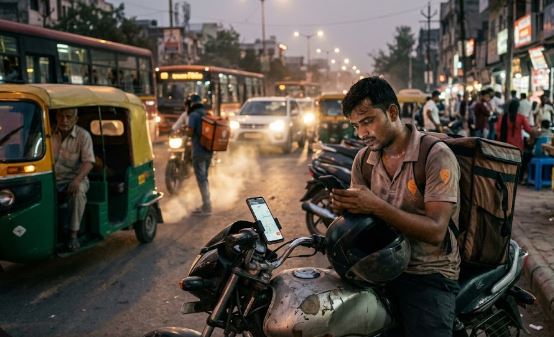
India’s gig economy is growing rapidly, creating work opportunities for delivery partners, cab drivers and other platform workers. Food delivery, online shopping and ride-hailing services have become part of everyday life, making these workers an important part of the country’s urban economy.
For many people, gig work offers a way to earn money without a traditional office job. It attracts students, migrant workers and people looking for additional income. However, behind the convenience of these services, many workers face financial pressure, long working hours and uncertain earnings.
India’s gig workforce is projected to grow from 7.7 million workers in 2020–21 to 23.5 million by 2029–30. While this growth creates new opportunities, it also highlights the need to improve workers’ income security and working conditions.
Rising Expenses Reduce Workers’ Earnings
Delivery partners and drivers must cover several expenses to keep working. Fuel, vehicle maintenance, mobile data and smartphone instalments can take a significant share of their earnings. Workers who purchase vehicles through loans must also make regular repayments, even when business is slow.
For example, a delivery partner may earn money throughout the day but take home much less after paying for petrol, repairs and other work-related costs. Unexpected expenses, such as a punctured tyre or vehicle breakdown, can further reduce monthly income.
This makes it difficult for workers to save money or manage household expenses. The difference between the amount shown in an app and the money left after expenses is an important part of the gig economy that is often overlooked.
Long Hours Do Not Always Mean Higher Income
Many gig workers spend long hours on the road to earn enough money. However, they are not necessarily paid for every hour they remain available for work.
Waiting for orders, travelling to pickup locations and dealing with traffic can consume valuable time without generating additional income. Incentives linked to completing a certain number of deliveries may also encourage workers to extend their working hours.
When orders are limited, workers may earn less despite spending more time online. This uncertainty makes it difficult to plan monthly budgets, pay bills and meet loan instalments.
Clearer payment systems and more transparent incentive policies could help workers understand their actual earnings and make better decisions about their working hours.
Debt Adds to Financial Pressure
Many delivery partners depend on smartphones and two-wheelers to earn a living. Workers who cannot afford these assets upfront often rely on loans or monthly instalments.
Debt becomes a serious problem when earnings fluctuate. Loan repayments continue even if a worker falls ill, faces a vehicle breakdown or receives fewer orders. Missing payments can lead to additional financial pressure and make it harder to manage future expenses.
For workers with limited savings, even a short period without income can create difficulties. Affordable financing, financial awareness and access to emergency support can help reduce the risk of falling into a debt cycle.
Health and Safety Often Take a Back Seat
The pressure to complete deliveries quickly can affect workers’ physical and mental well-being. Long hours on busy roads, irregular meals and limited opportunities to rest can cause fatigue and stress.
Extreme weather creates additional challenges. During summer, delivery partners may face intense heat, while heavy rain can make travel dangerous and delay deliveries. Taking breaks may also mean losing the opportunity to earn more.
Workers need access to drinking water, toilets, reasonable rest periods and appropriate safety measures. Accident insurance and health protection are equally important because an injury can immediately interrupt their income.
Improving working conditions can benefit workers as well as businesses by supporting safer and more reliable services.
App-Based Decisions Can Affect Livelihoods
Digital platforms use automated systems to assign orders, calculate incentives and monitor performance. Although these systems help manage large operations, workers may not always understand how decisions are made.
Sudden account suspensions, changes in incentives or difficulties reaching customer support can disrupt a worker’s income. When a platform account is blocked, the worker may lose access to work while still being responsible for household expenses and loan repayments.
Platforms should provide clear payment information, explain account restrictions and offer accessible complaint procedures. Workers need a fair opportunity to resolve problems that affect their ability to earn.
Social Security Is Essential for Long-Term Stability
Unlike many regular employees, gig workers may not have access to paid leave, employer-supported health insurance or predictable monthly salaries. This leaves them vulnerable when illness, accidents or family emergencies prevent them from working.
India has taken steps to recognise gig and platform workers in its social security framework. However, the effectiveness of these measures depends on how easily workers can register, understand their benefits and access support when needed.
Better insurance coverage, welfare schemes, transparent earnings and practical assistance can help workers manage unexpected financial difficulties.
Making Gig Work More Sustainable
India’s gig economy supports businesses, provides convenient services and creates earning opportunities for millions of people. However, its long-term success depends on whether workers can earn a reasonable income after expenses and maintain their financial security.
Workers can benefit from tracking daily earnings, fuel expenses, repairs and loan repayments to understand how much they actually earn. Platforms can improve conditions through transparent payment policies, accessible support and stronger safety measures. Policymakers can strengthen worker protection and ensure that social security reaches those who need it.
The growth of the gig economy should bring benefits to workers as well as consumers and businesses. Flexible work can be valuable, but it should not leave people struggling with debt, exhausting schedules and uncertain incomes.
India’s gig economy will be stronger when the people delivering its convenience can also build secure and sustainable livelihoods.


Leave a Reply