

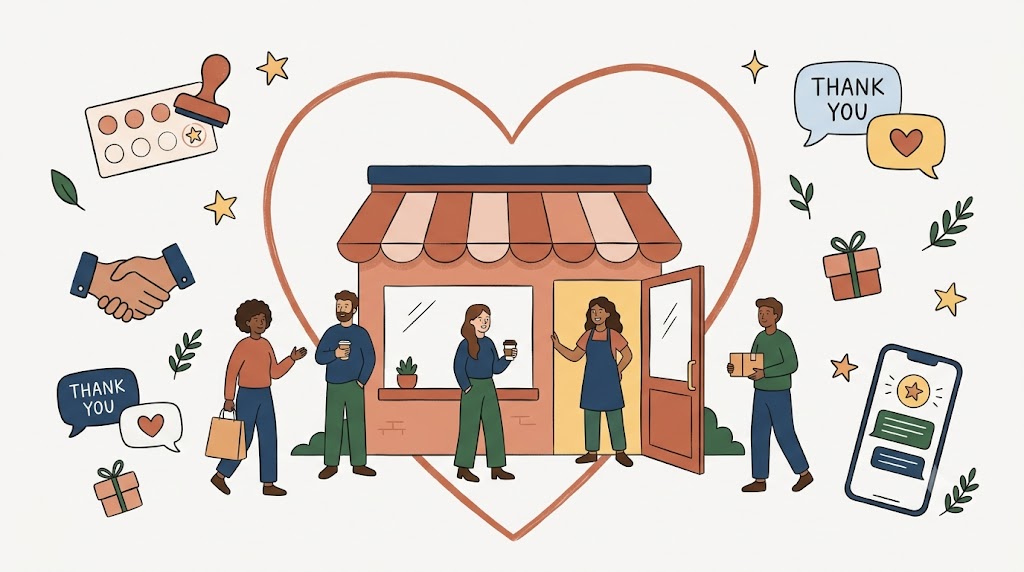
Small businesses can build customer loyalty without heavy discounts by focusing on personalised service, reliable product quality, meaningful rewards and a better customer experience. These strategies help improve customer retention, encourage repeat purchases and protect profit margins while building long-term relationships.
For small businesses, attracting a customer is only the beginning. The real challenge is giving people a reason to return.
Price cuts and promotional offers may generate immediate sales, but relying on them too frequently can reduce profit margins and encourage customers to wait for the next deal. For independent retailers, local service providers, cafés, salons and online stores, a more sustainable approach is to make customers feel valued through service, convenience and trust.
As competition increases, customer loyalty for small businesses is becoming an important part of sustainable growth. Businesses do not always need bigger marketing budgets or lower prices to stand out. They need to understand what their customers value and deliver it consistently.
Why Customer Loyalty Matters for Small Businesses
Customer loyalty helps businesses build a more dependable base of repeat buyers. When customers trust a business, they are more likely to return, recommend it to others and consider its new products or services.
By contrast, businesses that compete mainly through discounts can find it difficult to maintain profitability. A promotion may bring customers through the door, but it does not necessarily establish a lasting relationship.
A neighbourhood grocery store, for example, can strengthen customer loyalty through dependable product availability, quick billing and helpful service. A salon can encourage repeat bookings through consistent results, convenient appointments and personalised recommendations.
These everyday improvements can help small businesses compete on value rather than price alone.
1. Improve Customer Experience Instead of Cutting Prices
One of the most effective customer retention strategies is to make every interaction easy, helpful and reliable.
Small businesses often have an advantage over larger companies because owners and employees can interact directly with customers. Remembering a regular customer’s preferences, responding quickly to questions and offering useful advice can create a more personal experience.
Businesses should focus on the basics: consistent product quality, transparent pricing, polite communication and dependable service. When customers know what to expect, they have a stronger reason to return.
A positive experience also makes customers more comfortable recommending a business to friends and family. Over time, these recommendations can support organic growth without requiring constant promotional spending.
2. Introduce a Simple Customer Loyalty Programme
A customer loyalty programme can encourage repeat purchases without relying on heavy discounts.
Small businesses can start with a simple stamp card, points system or milestone-based reward. A café might offer a complimentary drink after a set number of purchases, while a bookstore could invite regular customers to exclusive reading sessions.
Other businesses can offer early access to new products, priority appointments, complimentary add-ons or personalised consultations.
The best rewards are relevant to the customer and affordable for the business to deliver. A complicated programme with unclear rules may discourage participation, so owners should keep the benefits straightforward and easy to understand.
The objective is to recognise repeat customers while ensuring that the programme supports, rather than weakens, profitability.
3. Personalise Customer Service
Personalised service is one area where small businesses can distinguish themselves from larger competitors.
Customers appreciate being recognised and receiving recommendations that match their needs. A clothing retailer might inform a regular customer when a preferred style arrives, while an online store could suggest products related to a previous purchase.
Even simple follow-up messages can make a difference. A business can thank customers after a purchase, check whether a service met their expectations or remind them when a product may need replenishing.
A basic customer relationship management system can help businesses organise purchase histories, preferences and follow-up dates. Smaller businesses can also begin with a well-maintained customer record, provided personal information is handled responsibly.
Communication should remain relevant and respectful. The purpose of personalisation is to make customers feel understood, not overwhelmed by promotional messages.
4. Build a Community Around Your Business
Customer loyalty becomes stronger when people feel connected to a business beyond the transaction itself.
Local businesses can organise small workshops, product demonstrations, customer appreciation events or informal meetups. A bakery could host a seasonal tasting session, while a homeware shop might offer a practical cooking demonstration.
Online communities can also help businesses stay connected with customers. Social media pages, newsletters and customer groups provide opportunities to share useful information, answer questions and invite feedback.
Listening is essential. When businesses respond to suggestions and make visible improvements, customers can see that their opinions matter.
Community engagement does not need to be expensive. Regular, meaningful interaction can be more valuable than a large event that creates attention but does little to strengthen relationships.
5. Make Shopping Convenient and Hassle-Free
Customers may leave a business not because of its prices, but because buying becomes inconvenient.
Long waiting times, confusing return policies, delayed replies and unreliable delivery can weaken trust. Improving these areas is a practical way to increase customer retention without offering discounts.
Small businesses can simplify billing, provide clear product information, communicate delivery timelines and make return or exchange policies easy to understand. Service providers can offer convenient booking options and reminders, while online retailers can improve mobile shopping and checkout processes.
Resolving complaints quickly is equally important. When a mistake occurs, a sincere apology and a fair solution can help preserve the relationship.
Reliability is a powerful competitive advantage. Customers are more likely to return when they know a business will respect their time and keep its promises.
6. Use Digital Tools to Encourage Repeat Purchases
Affordable digital tools can help small businesses maintain contact with existing customers without investing heavily in advertising.
Email newsletters, messaging platforms, digital loyalty cards and customer management software can support follow-ups, appointment reminders and updates about relevant products.
For example, a retailer can notify customers when an item they wanted is back in stock. A service provider can send a reminder before a scheduled appointment, while an online business can share product-care advice after a purchase.
Businesses should obtain appropriate consent before sending marketing messages and make it easy for customers to manage their communication preferences.
Technology works best when it supports useful, timely interactions. A personalised message that solves a customer’s problem is more likely to build trust than repeated generic promotions.
7. Recognise Loyal Customers With Meaningful Benefits
Not every reward needs to involve a price reduction. Small businesses can offer benefits that improve the customer experience while keeping costs under control.
These might include priority booking, early access to new collections, complimentary product samples, exclusive workshops or a personalised thank-you note.
The value of a reward depends on the customer and the context. A small gesture that feels thoughtful can be more memorable than a generic offer sent to everyone.
Businesses should calculate the cost of each benefit and consider whether it encourages repeat visits, referrals or stronger engagement. Loyalty initiatives should strengthen customer relationships without creating expenses that the business cannot sustain.
8. Measure Customer Retention and Business Performance
A loyalty strategy works best when businesses understand whether it is producing results.
Owners can begin by tracking a few practical customer retention metrics:
-
Repeat purchase rate: The percentage of customers who buy more than once during a defined period.
-
Customer retention rate: The proportion of customers a business keeps over a specific period.
-
Average order value: The average amount customers spend per transaction.
-
Referral activity: The number of new customers who arrive through recommendations.
-
Customer feedback: Reviews, complaints and suggestions that reveal what is working and what needs improvement.
These measures help businesses identify which initiatives are worth continuing. If customers return more often after a service improvement, for instance, the business may gain more from maintaining that improvement than from launching another discount campaign.
The aim is to build customer loyalty that contributes to revenue growth and healthy margins.
How Small Businesses Can Start Building Customer Loyalty Today
Small businesses do not need to introduce every strategy at once. A practical starting point is to identify why customers return, what causes them to leave and which improvements can be made with the available resources.
Begin by thanking recent customers, responding to unanswered queries, reviewing common complaints and recognising regular buyers. Then introduce one simple loyalty benefit and monitor whether it encourages repeat purchases.
Over time, these consistent actions can become part of the business’s everyday operations rather than an expensive marketing campaign.
Conclusion: Build Loyalty Through Value, Not Just Price
Building customer loyalty without heavy discounts requires a shift in thinking. Instead of treating lower prices as the main reason to return, small businesses can focus on quality, convenience, personalisation and dependable service.
These strategies help businesses strengthen customer relationships, encourage repeat purchases and protect profitability. They also give customers reasons to choose a familiar business even when competitors offer temporary deals.
Ultimately, sustainable customer loyalty grows when people feel that a business understands their needs and delivers on its promises. For small businesses, that trust can become a lasting competitive advantage.


Leave a Reply