

Roorkee, July 31: Rare earth elements (REEs) are essential for electric vehicles, smartphones, wind turbines, advanced electronics, defence technologies and many more, while uranium remains a critical fuel for nuclear power generation. The demand for these strategic resources continues to rise worldwide. They are often found together in contaminated waters associated with mining activities. Uranium in such waters poses a significant environmental and public health concern because it is radioactive, toxic, and can migrate through groundwater supplies.
Researchers at IIT Roorkee have developed an acid–resistant nanocomposite capable of removing uranium and rare earth elements from contaminated. These nano composites enable the recovery of contaminants as valuable resources. The technology offers a dual benefit cleaning polluted water and recovering materials vital across multiple applications.
A major challenge in this field is that metallic and magnetic nanoparticles, and composites, which are highly effective at capturing uranium and other contaminants, often corrode rapidly in acidic environments such as mining wastewater. Once corroded, these materials lose their efficiency and cannot be reused effectively.
To overcome this limitation, the IIT Roorkee team has developed a protective silica envelope around the active nanoparticle core. Silica, the primary component of natural sand, is well known for its excellent resistance to acidic conditions. Acting as a protective shield, the silica layer prevents the active material from dissolution while still allowing contaminants to be captured. Importantly, the silica envelope was synthesized using biocompatible agents rather than conventionally used toxic surfactants, making the material safer and more environmentally friendly.
Laboratory studies demonstrated that the material can remove and recover up to 370 grams of uranium and rare earth elements per kilogram of nanomaterial, highlighting its remarkable extraction capacity. The material performed efficiently under conditions similar to natural groundwater and continued to remain stable even in highly acidic waters where conventional materials typically fail.
Another notable feature is its tunable behavior. Under near-neutral conditions, the material can simultaneously capture both uranium and rare earth elements. Under highly acidic conditions, however, it becomes selective towards uranium, enabling targeted removal of the radioactive contaminant from complex water mixtures. In repeated laboratory tests, the material maintained nearly complete uranium removal performance over five consecutive cycles.
According to Prof. Nitin Khandelwal, “Most advanced metallic nanomaterials face a trade-off between reactivity and stability in complex matrices like acidic leachates. By creating an acid–resistant porous silica envelope around the active nanoparticle core, we have developed a material that remains functional even under harsh acidic conditions where conventional materials would lose their efficiency.”
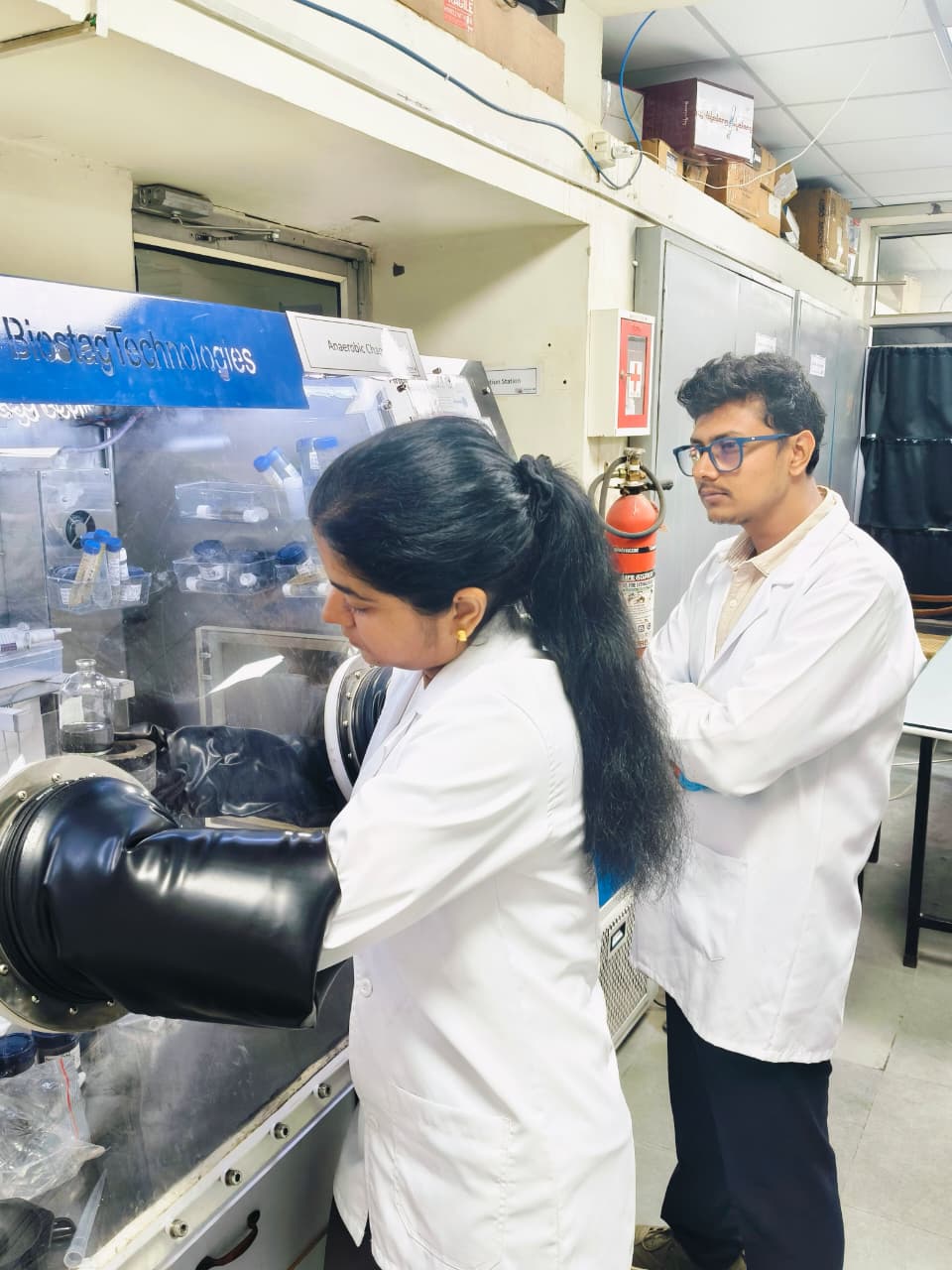
Ms Bhavya Swami, PhD scholar working on the project says, “We have also incorporated biochar derived from waste sewage sludge into the material, providing a productive use for an otherwise discarded waste stream. Tis combination of waste valorisation, contaminant removal, and resource recovery makes the technology particularly attractive from a sustainability and circular economy perspective.”
While the current work has been demonstrated at laboratory scale, the next step will involve testing the technology with real mining wastewater and nuclear wastewater under continuous-flow conditions. The researchers believe the innovation could contribute significantly to future water treatment, strategic metal recovery, and environmental protection efforts.
The project was funded by the Board of Research in Nuclear Sciences (BRNS), Department of Atomic Energy, Government of India, highlighting the national importance of developing advanced technologies for uranium recovery and environmental protection.

Leave a Reply