

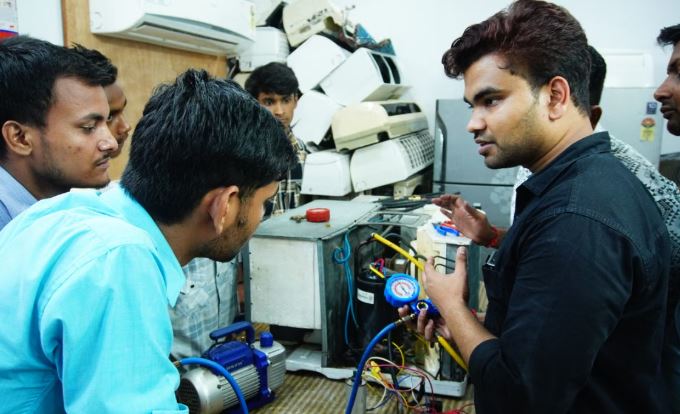
The value of education is increasingly being measured by how effectively it prepares people for the world of work. A qualification may provide a foundation, but employers also need individuals who can operate equipment, solve practical problems, work with digital systems and respond confidently to changing workplace demands. This growing emphasis on practical capabilities is bringing vocational training and industry-linked education into the mainstream of India’s economic and workforce development.
The shift is taking place at a time when businesses across manufacturing, construction, healthcare, logistics, information technology and renewable energy are adapting to new operating models. Automation is changing production processes, digitalisation is creating new occupational requirements, and the transition towards sustainable industries is opening up specialised career opportunities. These developments are increasing the need for workers who possess relevant technical skills and can continue learning as their professions change.
For India, the challenge is particularly important. A large young population offers considerable potential for economic growth, but that potential can only be realised when education and employment opportunities develop together. Vocational training must therefore move beyond the traditional approach of preparing students for a limited number of occupations. It needs to become a flexible system that connects classroom learning with practical experience, industry requirements and opportunities for lifelong professional development.
Bringing Education Closer to the Needs of Industry
One of the persistent challenges in workforce development is the gap between academic learning and the practical expectations of employers. Students may complete courses with a sound understanding of theoretical concepts but still require additional training before they can perform effectively in a professional environment.
Industry-linked education offers a more direct response to this problem. It encourages companies to participate in curriculum development, practical instruction, workplace assessments and career-oriented training. Rather than designing courses entirely within educational institutions, this approach brings employers into the learning process.
The benefits are significant for both sides. Educational institutions gain a better understanding of changing occupational requirements, while businesses can help develop talent with the competencies their operations demand.
In manufacturing, for example, training programmes can incorporate industrial automation, machine maintenance, quality control and workplace safety. Healthcare courses can place greater emphasis on practical patient-care procedures and the use of modern medical equipment. Similarly, logistics programmes can prepare learners for digital inventory systems, warehouse automation and supply-chain management.
Such collaboration also allows institutions to update their courses more regularly. When industries introduce new equipment, software or production methods, training programmes must respond rather than continue teaching skills that are gradually becoming less relevant.
Technology Is Changing the Way Vocational Skills Are Taught
The modern workplace is increasingly technology-dependent, and vocational education must reflect this reality. Artificial intelligence, automation, virtual reality and augmented reality are creating new possibilities for practical instruction and technical skill development.
Virtual reality can provide simulated environments in which students practise selected procedures before working with actual machinery or equipment. Augmented reality can offer visual guidance during maintenance, assembly and repair tasks. Artificial intelligence can support personalised learning by identifying areas where students need additional instruction or practice.
These developments can make certain forms of technical training safer, more interactive and easier to repeat. They are particularly useful in situations where equipment is expensive, access to practical facilities is limited or mistakes during initial training could create safety risks.
However, technology cannot replace the experience of working with real tools, materials and workplace systems. A student learning electrical maintenance, construction techniques or industrial operations still needs supervised practical instruction.
The priority for educational institutions should be to combine digital learning with meaningful hands-on experience. Technology is most valuable when it improves the quality of training and prepares learners for the conditions they will encounter at work.
Apprenticeships Are Giving Practical Experience Greater Importance
Employers often look beyond academic qualifications when recruiting for technical and operational roles. They want candidates who understand workplace responsibilities, can follow procedures and have some experience of performing tasks in real business environments.
Apprenticeships address this requirement by combining structured instruction with supervised workplace experience. Learners develop practical competencies while working alongside experienced professionals, gaining exposure to equipment, production systems, customer requirements and professional standards.
For young people, this experience can make the transition from education to employment more manageable. They gain a clearer understanding of their chosen occupation and have an opportunity to demonstrate their abilities in a professional setting.
Businesses also benefit. Apprenticeship programmes allow employers to develop potential recruits according to their operational requirements and assess their suitability before considering longer-term employment.
India’s National Apprenticeship Training Scheme and National Apprenticeship Promotion Scheme are important parts of the country’s efforts to strengthen work-based learning. Their effectiveness will depend on the availability of quality training positions, employer participation, appropriate supervision and meaningful learning outcomes.
Apprenticeships should not be viewed simply as temporary work arrangements. Their real value lies in providing a structured route through which learners acquire recognised skills and businesses develop future talent.
Flexible Learning Is Making Skills Development a Continuous Process
The traditional assumption that education ends when a person completes a degree or diploma is becoming increasingly difficult to sustain. New technologies, changing business practices and evolving job responsibilities mean that workers may need to update their skills several times during their careers.
Short-term courses, modular qualifications and micro-credentials are helping make this process more flexible. Instead of returning to full-time education, individuals can pursue specialised training in areas directly relevant to their professional responsibilities.
An employee in manufacturing may undertake additional instruction in robotics or automation, while a retail professional may develop skills in digital inventory management and customer analytics. A construction worker may pursue further training in energy-efficient building techniques or specialised equipment operation.
India’s National Credit Framework and Academic Bank of Credits, developed within the broader education reforms under the National Education Policy 2020, support a more flexible approach to learning and credit recognition.
This model can benefit students, working professionals and employers. Learners gain opportunities to build qualifications progressively, while companies can support employee development without requiring lengthy interruptions to work.
For training providers, modular education also creates scope to develop specialised programmes in collaboration with businesses facing specific skill shortages.
Green Industries Are Creating Demand for New Technical Skills
The shift towards a more sustainable economy is changing the employment landscape and expanding the importance of vocational training. Renewable energy, electric mobility, energy-efficient construction, waste management and environmental services are creating demand for specialised technical capabilities.
The growth of solar energy projects, for example, requires trained professionals who can install, maintain and repair solar systems. The expansion of electric mobility creates opportunities in vehicle servicing, battery technology and charging infrastructure. Similarly, sustainable construction requires workers familiar with energy-efficient materials, modern building practices and environmental standards.
These occupations demonstrate why vocational education must respond to developments beyond traditional industrial sectors. Training programmes need to incorporate green technologies and environmental awareness alongside established technical skills.
There is also an opportunity to retrain existing workers. As companies modernise their operations, employees with experience in conventional processes may require additional instruction to work with newer technologies and equipment.
Institutions that establish relevant green-skills programmes can contribute to workforce readiness while helping businesses access talent for emerging areas of economic activity.
Technical Knowledge Must Be Supported by Human Skills
Technical competence remains fundamental to vocational education, but it is no longer sufficient on its own. Employers also value communication, teamwork, critical thinking, problem-solving and the ability to work responsibly with others.
These capabilities influence workplace performance across almost every industry. A technician may understand how to repair a machine but must also be able to identify the underlying problem, explain the required work and follow safety procedures. A healthcare professional needs practical knowledge as well as empathy, attention to detail and clear communication.
As automation takes over certain repetitive activities, human judgement and adaptability will become even more important. Employees will increasingly be expected to work alongside digital systems, interpret information and respond to situations that require independent decision-making.
Vocational institutions must therefore treat soft skills as an integral part of technical education. Communication exercises, group projects, workplace simulations and practical problem-solving activities can help students develop the confidence needed to perform effectively in professional environments.
Businesses Have a Greater Role in Developing Future Talent
Industry-linked education is not simply an educational reform. It is also a business investment in workforce quality and long-term productivity.
Companies that work with colleges, technical institutions and training providers can help identify the competencies required for specific roles. They can contribute industry experts, provide access to equipment, offer internships and support workplace assessments.
Such partnerships can be particularly valuable in sectors where businesses struggle to recruit employees with specialised technical capabilities. Developing a reliable talent pipeline can reduce recruitment pressure and limit the time and expense associated with training new employees after hiring.
There are opportunities for private training providers and technology companies as well. Demand is likely to grow for specialised technical courses, digital learning platforms, simulation-based instruction, professional certifications and customised corporate training.
Small and medium-sized enterprises can also benefit from collective training arrangements. Individual MSMEs may not have the financial resources to establish their own training facilities, but partnerships with local institutions and industry associations can provide access to relevant programmes.
For educational institutions, closer engagement with employers can improve course relevance, strengthen placement opportunities and build credibility among students and families.
Overcoming the Barriers to Quality Vocational Education
Despite its growing importance, vocational education faces several challenges. Access to quality training remains uneven, particularly in regions where institutions lack modern equipment, qualified instructors and established industry partnerships.
The perception of vocational courses is another concern. Many students and families continue to associate conventional academic degrees with better career prospects, while technical and skill-based education is sometimes viewed as a secondary option. Changing this perception requires stronger employment outcomes, recognised qualifications and visible opportunities for career progression.
Affordability and accessibility also matter. Students from economically weaker backgrounds may struggle to pay for specialised training, while working professionals may find it difficult to attend programmes that require long periods away from employment.
Addressing these issues will require sustained investment in training infrastructure, instructor development, affordable courses and regional access. Employers must also participate more actively in creating practical learning opportunities.
Most importantly, the success of vocational programmes should be assessed through the quality of employment they generate. Enrolment figures and certificates alone cannot establish whether a training system is meeting industry needs. Job placements, wage growth, workplace performance and career progression provide a more meaningful picture.
Building a Workforce That Can Adapt and Grow
The future of vocational training will be shaped by how successfully India connects education with the realities of a changing economy. Manufacturing expansion, digital transformation, infrastructure investment and the growth of sustainable industries are creating opportunities, but they also demand a workforce with relevant and continuously updated skills.
Educational institutions cannot meet this requirement independently. Employers must help identify emerging skill needs, training providers must deliver practical and accessible programmes, and policymakers must create an environment in which vocational qualifications are recognised and valued.
For businesses, investment in industry-linked education can strengthen productivity, reduce skills shortages and improve workforce stability. For learners, it can provide a more direct connection between education, employment and professional advancement.
The real measure of vocational education will not be how many people complete a training course, but how effectively they can apply what they have learned in the workplace. As India’s industries evolve, a stronger partnership between education and enterprise will be essential to turning the country’s demographic potential into a skilled, productive and competitive workforce.


Leave a Reply