

New Delhi, Nov 20: The Ministry of Jal Shakti has launched a nationwide campaign to improve the functionality, cleanliness and accessibility of community and institutional toilets in rural India, with a special focus on women, girl students and persons with disabilities.
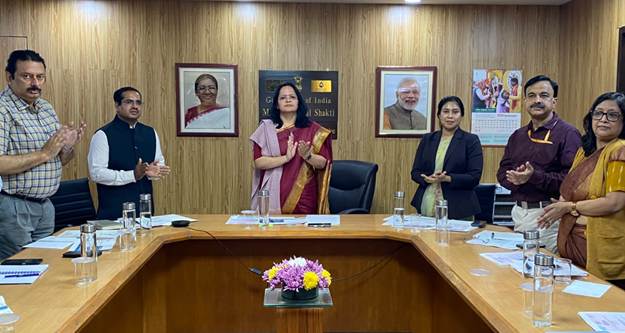
The Department of Drinking Water and Sanitation (DDWS) launched the ‘Swachh Shauchalay – Garimamay Bhavishya’ (SSGB) campaign on November 19, marking World Toilet Day 2026. The initiative, being implemented under the Swachh Bharat Mission (Grameen), will continue until December 10, Human Rights Day.
The campaign and its dedicated online reporting module were launched by Aishvarya Singh, Joint Secretary and National Mission Director of SBM(G), to enable States and Union Territories to assess facilities, report progress and take corrective measures.
The initiative is aligned with this year’s United Nations World Toilet Day theme, ‘Safe toilets. Equal futures’, which highlights the link between safe sanitation and gender equality.
Focus on Repairs, Accessibility and Maintenance
Under the campaign, States and UTs will assess the condition of community sanitary complexes (CSCs) and institutional toilets in schools, Anganwadi centres and Panchayat Ghars. Necessary repairs, maintenance and restoration will be undertaken in coordination with the concerned authorities.
Households will also be encouraged to repair and maintain individual household latrines wherever required.
The campaign will include an assessment of toilet designs and village-level sanitation infrastructure. States and UTs will identify single-pit toilets that can be converted into twin-pit systems, as well as septic tanks without soak pits that can be retrofitted with soak pits wherever feasible.
Mechanised desludging requirements will also be assessed to ensure compliance with faecal sludge management norms. The initiative will further examine and strengthen arrangements for the regular operation and maintenance of community and institutional toilets.
Making Public Toilets Cleaner and More Welcoming
Beyond infrastructure upgrades, the campaign seeks to improve the overall experience of using public sanitation facilities. Communities will be encouraged to make community and institutional toilets clean, welcoming and well-maintained through local wall art, proper signage and improvements to their surroundings.
The initiative will also promote sustained toilet usage and assess the status of Open Defecation Free (ODF) sustainability in villages through behaviour change communication and awareness activities.
States and UTs have been asked to review the status of Swachh Seva Aankalan (SSA) at the village and Gram Panchayat levels and complete pending assessments by November 30. Where assessments have already been submitted, officials will discuss measures to address the gaps identified.
Schoolchildren, Community Participation at the Core
The campaign will place particular emphasis on sanitation awareness among women, girls and persons with disabilities, alongside personal and community hygiene, handwashing with soap and proper faecal sludge management.
Awareness drives will also cover compliance with the Solid Waste Management Rules, 2026, four-way waste segregation and the importance of Swachh Seva Aankalan.
Addressing the launch event, Singh said the campaign was built around the principles of dignity for all and sanitation for all. She highlighted the role of schoolchildren as future custodians of cleanliness and stressed the need to sensitise them about sanitation, hygiene and community responsibility.
She urged State and UT SBM(G) teams to coordinate with School Management Committees and relevant departments to involve students in campaign activities, including school sanitation audits.
Singh also underlined the importance of maintaining clean and functional community toilets in high-footfall public locations, particularly tourist destinations, noting that sanitation facilities influence visitors’ experiences and can contribute to local economic activity.
During the launch programme, representatives of Gujarat, Madhya Pradesh, Sikkim and Karnataka shared their proposed action plans for implementing the campaign.
The programme concluded with an appeal to States and UTs to involve local communities and other stakeholders to make the initiative a collective movement for comprehensive sanitation under the principle of Jan Bhagidari.


Leave a Reply