

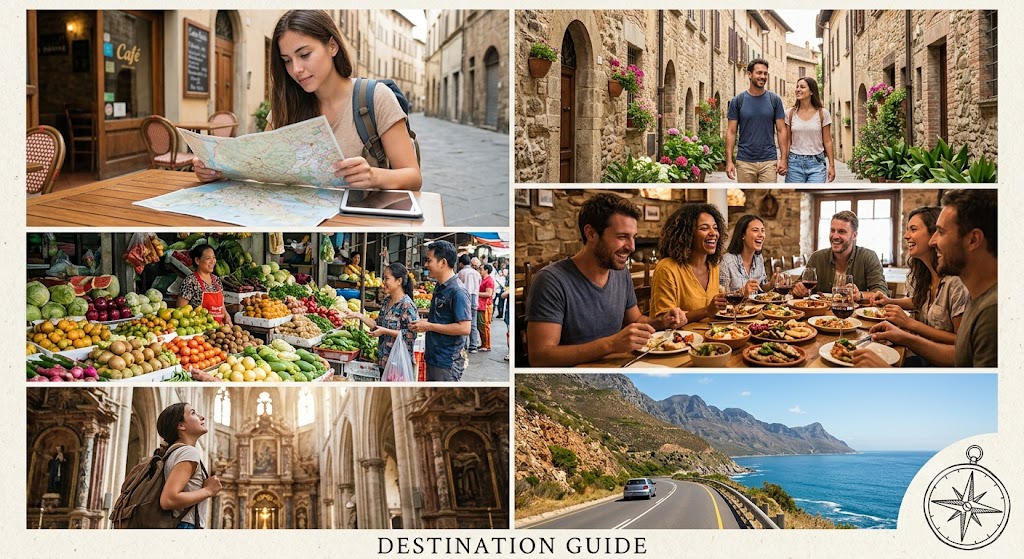
Travel is no longer simply about reaching a famous landmark, checking it off a list and moving on. Modern travellers want to understand the places they visit. They want to walk through old streets, learn the stories behind historic buildings, taste local food, discover hidden corners and experience the rhythm of everyday life.
A well-crafted Destination Guide brings all of these elements together. It becomes more than a collection of directions and tourist attractions. It becomes a window into the personality of a destination.
From the first look at a map to the final meal of a trip, destination information can shape the way travellers experience a place.
Where the Journey Really Begins
Every journey begins with planning.
Before leaving home, travellers usually want to understand the geography of a destination, the best ways to reach it, the distances between important places and the most convenient ways to move around. Roads, railway connections, airports, public transport and walking routes all form an important part of the travel experience.
A Destination Guide brings this practical information together in a way that is easy to understand.
For road travellers, it can highlight scenic highways, interesting stops and routes that connect different towns or attractions. For city travellers, it can explain public transport, neighbourhoods and walking routes. This information can make an unfamiliar destination feel more approachable.
A Map Can Tell More Than Directions
A map is not merely a tool for finding a road.
It can reveal how a destination has developed, where its historic centre lies, how neighbourhoods are connected and where visitors can find markets, museums, restaurants, parks and cultural attractions.
When maps are combined with local information, travelling becomes easier and more engaging. Visitors can plan their days around nearby experiences instead of spending valuable holiday time travelling unnecessarily between distant locations.
Every Place Carries Its History
One of the most rewarding parts of travel is discovering the story behind a place.
A centuries-old street, an old railway station, a fort, a temple, a church, a museum or a traditional marketplace can tell visitors something about the people and events that shaped a destination.
A Destination Guide can bring these stories closer to travellers by providing historical context in an accessible way.
Knowing the history behind a landmark can change the way it is experienced. A building is no longer simply an attractive structure; it becomes part of a larger story about a city, region or community.
Culture Lives in Everyday Places
The character of a destination is often found outside its major tourist attractions.
It can be seen in local markets, heard in traditional music, expressed through handicrafts and experienced during festivals and community celebrations. Architecture, clothing, art and everyday customs can reveal aspects of a culture that visitors might otherwise miss.
Destination Guides can introduce travellers to these experiences while providing useful information about local traditions and etiquette.
This encourages visitors to explore with greater awareness and respect, while creating opportunities for meaningful interaction with local communities.
Food Adds Flavour to the Journey
Food has become one of the most important parts of modern travel.
Travellers increasingly seek local dishes, traditional cooking methods, regional ingredients and food markets as part of their destination experience. A meal can become a way of understanding geography, agriculture, history and culture.
A Destination Guide can help visitors discover the culinary identity of a place by highlighting traditional dishes, local markets, food streets, cafés, restaurants and regional specialities.
For travellers, this adds another layer to exploration. For local businesses, it creates visibility and can bring more visitors to restaurants, food markets, farms, producers and small culinary enterprises.
Making Limited Travel Time Count
A holiday may last only a few days, but a destination can offer far more experiences than a traveller can fit into that time.
A good Destination Guide helps organise those possibilities.
Historical attractions can be combined with nearby cultural sites. A morning at a museum can be followed by lunch at a local restaurant and an evening exploring a market or waterfront. Nature trails, shopping areas and entertainment venues can also be incorporated into a practical itinerary.
This kind of planning allows travellers to spend less time figuring out logistics and more time enjoying the destination.
Finding the Places Beyond the Postcards
The most famous attractions naturally draw visitors, but some of the most memorable travel experiences can happen away from the usual tourist trail.
A quiet neighbourhood, independent café, family-run restaurant, local craft shop, village market or lesser-known viewpoint can provide a more personal connection with a destination.
Destination Guides have an important role in bringing such places into the spotlight.
This wider discovery can also support the local tourism economy. When visitors explore beyond major attractions, spending can reach smaller hotels, restaurants, transport providers, guides, artisans, retailers and community-based tourism businesses.
The Evolution of the Travel Guide
The traditional travel guidebook has changed with technology.
Today, travellers can combine digital maps, travel websites, videos, mobile applications, reviews and online itineraries while planning a trip. Information can be accessed before departure and throughout the journey.
Yet the basic purpose remains the same: helping people understand where they are going and make the most of their time there.
The modern Destination Guide is becoming a more complete travel companion, bringing together navigation, history, culture, food, accommodation, activities and local experiences.
Travel With More Meaning
A destination becomes more memorable when travellers understand its identity.
A road becomes part of the adventure when its landscape and history are known. A historic building becomes more fascinating when its past is understood. A local dish becomes more meaningful when its ingredients and traditions are discovered. A market becomes more than a shopping stop when travellers meet the people and stories behind it.
This is where the Destination Guide finds its true value.
It connects the practical side of travel with the emotional side of discovery. It helps travellers navigate a destination, but also encourages them to slow down, observe, taste, learn and connect.
As global tourism continues to evolve towards more personalised and experience-led journeys, the Destination Guide is becoming an important part of how people discover the world – one road, one story, one meal and one local experience at a time.


Leave a Reply