


Dhauli, Odisha: Perched atop the historic Dhauli Hills, overlooking the serene waters of the Daya River, the magnificent Dhauli Shanti Stupa stands as a timeless symbol of peace, compassion and human transformation. Located around 7 km from Bhubaneswar, this iconic white monument is not merely an architectural landmark but a powerful reminder of one of the most significant turning points in ancient Indian history — Emperor Ashoka’s transformation following the Kalinga War.
The tranquil surroundings of Dhauli today offer little indication of the violence and devastation associated with the region more than two millennia ago. Yet, the hills and the river remain closely connected with the story of the bloody conflict that changed the course of Emperor Ashoka’s life and, eventually, shaped his commitment to peace and Dhamma.
The Kalinga War: A Turning Point in History
The historic Kalinga War, fought around 261 BCE between the Mauryan Empire under Emperor Ashoka and the independent kingdom of Kalinga, is remembered as one of the bloodiest conflicts of ancient India. Kalinga, corresponding broadly to present-day Odisha and adjoining regions, was strategically and culturally important, and its conquest was a major objective of the Mauryan ruler.
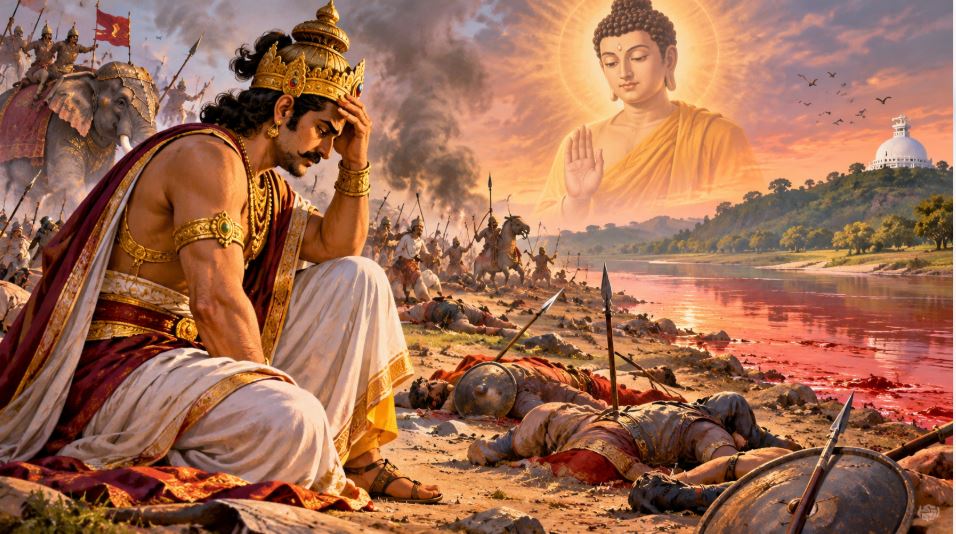
The Daya River valley is traditionally associated with the battlefield. According to popular accounts, the river waters turned red with the blood of those killed in the fierce fighting. The scale of destruction left a deep impression on Ashoka. His own inscriptions refer to the immense human suffering caused by the conquest, including deaths, deportations and the distress of affected families.
Although victorious, Ashoka was deeply troubled by the consequences of the war. The experience is widely regarded as a decisive moment in his personal and political journey. He gradually moved away from military expansion towards a philosophy centred on compassion, moral conduct, religious tolerance and non-violence.
This transformation is often described as a shift from Bherighosha — the sound of the war drum — to Dhammaghosa, the proclamation of Dhamma. Rather than seeking glory through conquest, Ashoka increasingly emphasised winning hearts through righteousness and peaceful conduct.
Dhauli Shanti Stupa: A Monument Dedicated to Peace
More than two thousand years after the Kalinga War, the Dhauli Hills acquired a striking new identity with the construction of the Shanti Stupa in 1972. Built through the joint efforts of the Japan Buddha Sangha and the Kalinga Nippon Buddha Sangha, with the inspiration and guidance of Japanese Buddhist leader Fuji Guruji, the monument commemorates the message of peace associated with Ashoka and the Buddhist tradition.

Rising gracefully against the backdrop of the surrounding landscape, the dazzling white dome of the Shanti Stupa creates a striking contrast with the historical memories of war associated with Dhauli. Its architecture and artistic panels convey the central teachings of Buddhism, including compassion, harmony and the rejection of violence.
The monument features beautifully crafted sculptures and relief panels depicting significant episodes from the life of Gautama Buddha, including his enlightenment and Mahaparinirvana. Other artistic representations include Buddha’s footprints, the Bodhi tree and Emperor Ashoka laying down his sword before embracing the path of peace.
Every element of the structure reinforces its central message: true greatness lies not in conquering territories but in conquering hatred and ignorance.
Ashokan Rock Edicts: Messages from the Mauryan Era
Dhauli’s historical importance extends beyond the Shanti Stupa. At the foothills, visitors can find the famous Ashokan Rock Edicts, among the most valuable archaeological remains of the Mauryan period.
Dating back to the third century BCE, these inscriptions, engraved in Brahmi script, provide important insights into Ashoka’s policies, administration and philosophy of Dhamma. They reflect his concern for the welfare of people, ethical governance, religious tolerance and humane treatment of living beings.
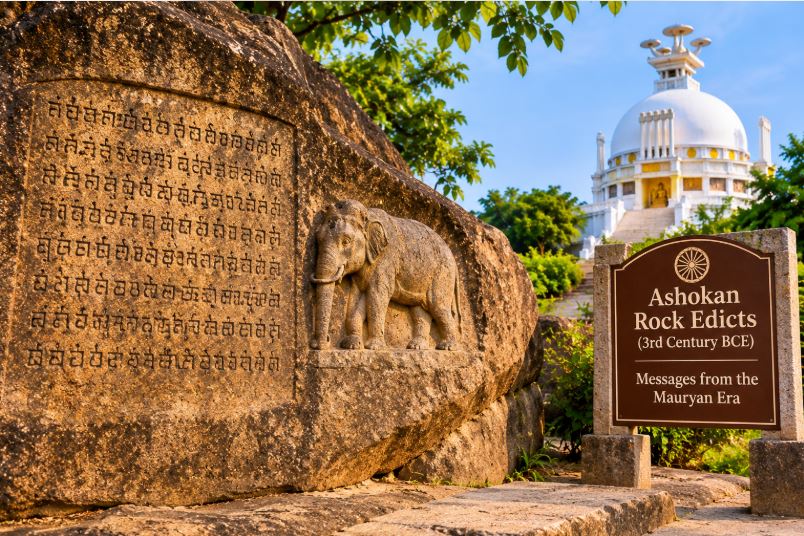
The Dhauli edicts are particularly significant because they communicate the ruler’s changed approach towards the people of Kalinga following the war. They offer historical evidence of Ashoka’s efforts to promote welfare and reconciliation after the conquest.
Another remarkable feature of the site is its ancient rock-cut elephant sculpture, carved into the rock face. Considered one of the earliest known examples of rock-cut animal sculpture in Odisha, the elephant is an important attraction for history enthusiasts and visitors alike.
A Spiritual Retreat Amid Natural Beauty
Beyond its historical and architectural importance, Dhauli is also a place of spiritual tranquillity. The panoramic views of the Daya River and the surrounding green landscape make the hill an appealing destination for visitors seeking a peaceful retreat.
The nearby Saddharma Vihar Monastery adds to the Buddhist character of the area, while the Dhabaleshwar Temple, dedicated to Lord Shiva, reflects the region’s diverse religious traditions.

Dhauli also hosts the annual Kalinga Dhauli Mahotsav, a cultural festival organised with the involvement of Odisha’s tourism authorities. The event brings together classical dance, music and cultural performances, celebrating Odisha’s artistic heritage against the backdrop of this historic landscape.
The evening light and sound show is another attraction associated with Dhauli. Through narration and visual effects, it brings alive the story of the Kalinga War, Ashoka’s transformation and the emergence of his philosophy of peace. Visitors should check the latest schedule, as show timings and operating days may vary.
A Timeless Message for the Modern World
Today, Dhauli Shanti Stupa stands as much more than a tourist destination. It represents the possibility of change, the power of remorse and the enduring value of compassion. The place where history remembers a devastating war has become a symbol of humanity’s longing for peace.

As visitors look at the white dome overlooking the Daya River, they are reminded of a remarkable historical lesson: victory achieved through force may bring an empire under control, but only compassion and understanding can win the hearts of people.
From the battlefield of Kalinga to the peaceful heights of Dhauli, the journey of Emperor Ashoka continues to inspire generations. The Shanti Stupa preserves that legacy, sending a message across centuries that peace is not a sign of weakness, but the highest expression of human strength.


Leave a Reply