

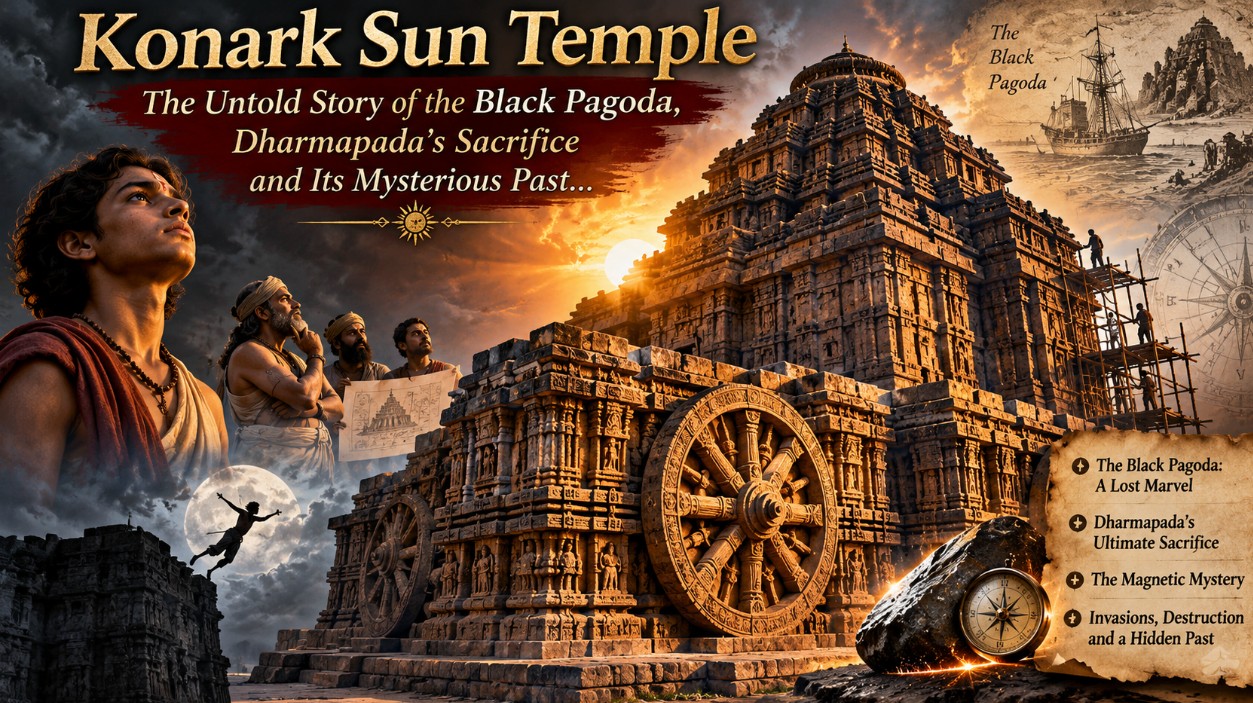
Odisha’s magnificent 13th-century Sun Temple stands as a timeless symbol of India’s architectural brilliance, while centuries-old tales of sacrifice, magnetic mysteries and destruction continue to surround its remarkable past.
Konark, Odisha: Rising from the coastal landscape of Odisha, approximately 35 km northeast of Puri, the magnificent Konark Sun Temple is more than an architectural masterpiece. It is a monument where history, mythology, engineering and mystery come together, preserving stories that have fascinated generations.
Built around 1250 CE under the patronage of King Narasimhadeva I of the Eastern Ganga Dynasty, the temple was dedicated to Surya, the Hindu Sun God. Its extraordinary design, intricate stone carvings and colossal chariot-like structure earned it a place among India’s most celebrated heritage monuments. Recognising its outstanding cultural significance, UNESCO declared it a World Heritage Site in 1984.
But the temple is perhaps just as famous for the mysteries and legends that have survived alongside its magnificent stonework.
The Black Pagoda: A Landmark That Guided Sailors
For centuries, European sailors navigating the Bay of Bengal referred to Konark Sun Temple as the ‘Black Pagoda’. Its imposing dark appearance made it a prominent landmark along the coastline, helping sailors identify their position at sea.

The name Konark itself is believed to have originated from two Sanskrit words — ‘Kona’, meaning corner, and ‘Arka’, meaning Sun.
Yet what makes this monument truly extraordinary is its architecture.
A Colossal Stone Chariot of the Sun God
The entire temple was conceived as a gigantic celestial chariot carrying Surya across the heavens. Its structure features 12 pairs of elaborately carved stone wheels and seven horses, symbolising the movement of the Sun and the passage of time.
The 24 wheels are among the temple’s most remarkable features. Their intricate spokes and carvings are associated with the measurement of time, and the shadows they cast can be used as sundials.
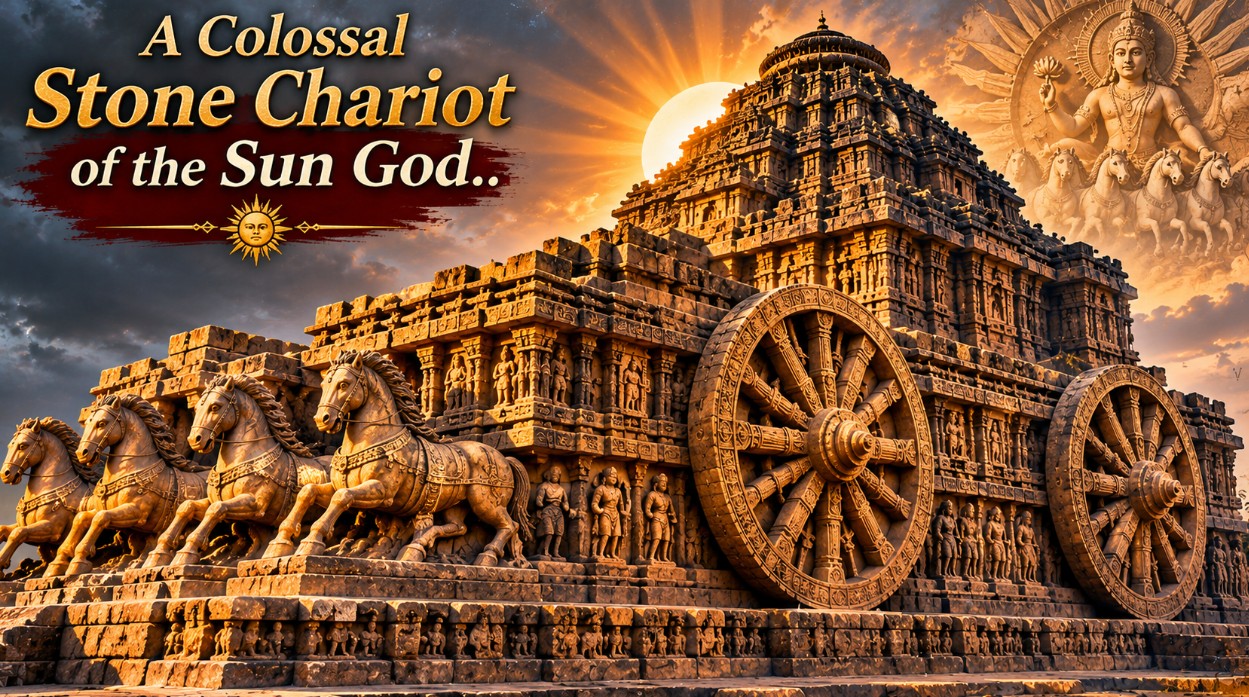
Constructed primarily from Khondalite stone, the temple reflects the grandeur of the Kalinga school of architecture. Its surviving structures include the Jagamohana, or audience hall, and the Natmandir, or dance hall. The towering main sanctum, known as the Vimana, has largely disappeared.
The exterior walls remain a breathtaking gallery of stone sculpture. Gods and goddesses, celestial musicians, dancers, animals, royal processions and scenes from everyday life are intricately carved into the stone, revealing the artistic sophistication of medieval Odisha.
Dharmapada: The Boy Whose Sacrifice Became a Legend
Among the most emotional stories associated with Konark is the legend of Dharmapada, a young boy whose extraordinary courage is said to have saved the lives of 1,200 artisans.
According to popular folklore, Dharmapada was the 12-year-old son of Bishu Maharana, the chief architect entrusted with the construction of the temple. His father had left home shortly after his birth to work on the ambitious royal project.

Having grown up without seeing his father, Dharmapada eventually learned about him and travelled to Konark to meet him.
However, their joyful reunion soon turned sombre. The construction team was reportedly facing a serious engineering challenge: the final crowning stone, or Kalasha, could not be securely placed atop the temple despite repeated attempts.
The king had allegedly imposed a strict deadline, threatening severe punishment if the work remained incomplete.
After understanding the problem, the young Dharmapada is said to have studied the structure and identified the solution. Despite his age, he successfully completed the task that had defeated the experienced artisans.
But the achievement brought another dilemma. According to the legend, the workers feared that the king might punish them for allowing a child to accomplish what the entire team had struggled to achieve.
Determined to protect his father and the other artisans, Dharmapada is said to have jumped into the Chandrabhaga River, sacrificing his life.
Although there is no established historical evidence confirming this account, the story remains deeply embedded in Odisha’s cultural memory. It represents courage, sacrifice and the human cost that popular imagination associates with the creation of this monumental structure.
The Mystery of the Missing Lodestone
Perhaps no story surrounding Konark has captured the popular imagination quite like the legend of its enormous magnetic stone.
According to traditional accounts, a massive lodestone was once positioned at the top of the temple. It was believed to have played a role in suspending or stabilising the image of Surya within the sanctum.
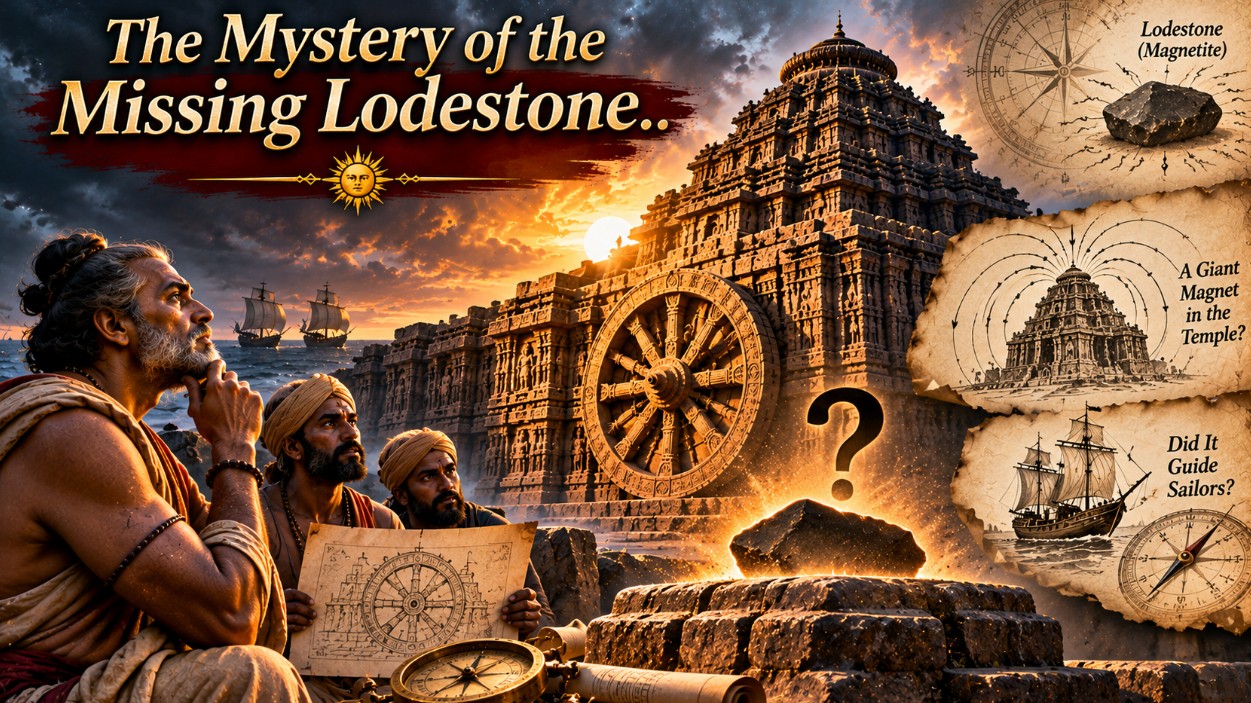
Some versions of the story even claim that its magnetic force interfered with the compasses of passing European ships, prompting sailors to remove the stone.
Another version suggests that the magnet helped hold the temple’s iron framework together and that its removal contributed to the collapse of the structure.
However, historians and archaeologists have not established reliable evidence for these claims. The supposed weight of the magnet, its precise function and its alleged removal remain part of folklore rather than verified historical fact.
Nevertheless, the lodestone legend continues to add an intriguing dimension to the temple’s mysterious reputation.
What Really Happened to the Grand Temple?
The decline of Konark Sun Temple remains a subject of historical discussion. Once envisioned as an enormous architectural complex, it gradually lost much of its original grandeur, particularly with the collapse of its principal sanctum.
Several explanations have been proposed over the centuries, including structural weaknesses, environmental exposure, natural deterioration and attacks during periods of political conflict.
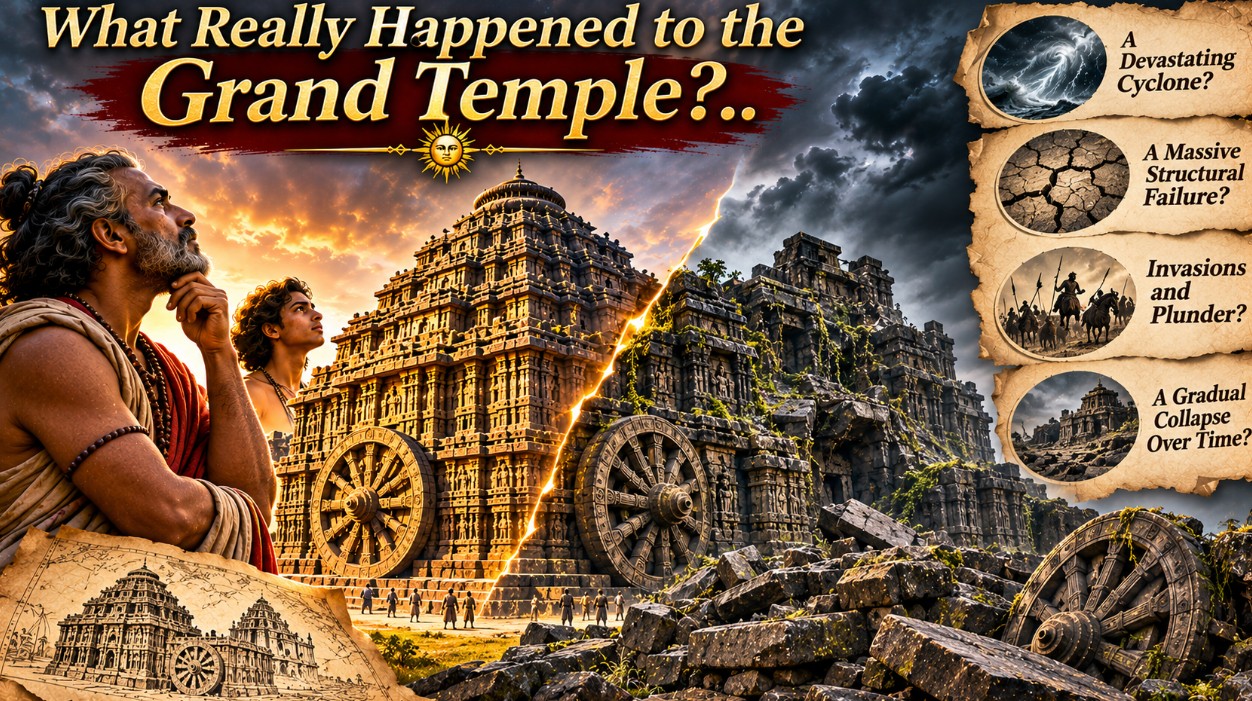
One historical account associates the destruction of temples in Odisha with Kalapahad, a military figure whose campaigns against Hindu religious establishments are remembered in regional narratives. His name is often linked to the damage suffered by Konark, although the exact circumstances and extent of his role remain debated.
Other popular theories attribute the temple’s deterioration to earthquakes, lightning or unstable foundations. However, no single explanation conclusively accounts for the monument’s decline.
The Archaeological Survey of India has undertaken conservation measures to protect the surviving structures. The main sanctum, however, remains lost, leaving visitors to imagine the extraordinary scale of the original temple.
A Monument That Continues to Tell Its Story
Today, Konark Sun Temple stands as one of India’s most extraordinary cultural treasures. Its image is also featured on the reverse of India’s ₹10 currency note, bringing its architectural legacy into everyday life.
Beyond its historical significance, the monument is a testament to the vision, craftsmanship and technical abilities of the artisans who created it more than seven centuries ago.

The story of Dharmapada, the mystery of the lodestone and the unanswered questions surrounding its decline may never be fully resolved. Yet these narratives have become part of the temple’s enduring identity.
Even in its partially ruined state, Konark continues to command admiration. Its stone wheels still evoke the movement of time, its sculptures preserve the artistic spirit of an ancient civilisation, and its surviving architecture offers a glimpse into the grandeur of medieval India.
Centuries may have passed, and much of the original structure may have disappeared, but the Konark Sun Temple has never lost its power to inspire wonder. It remains not merely a monument of stone, but a living chapter of India’s history — where the brilliance of human craftsmanship meets the enduring mysteries of time.


Leave a Reply