

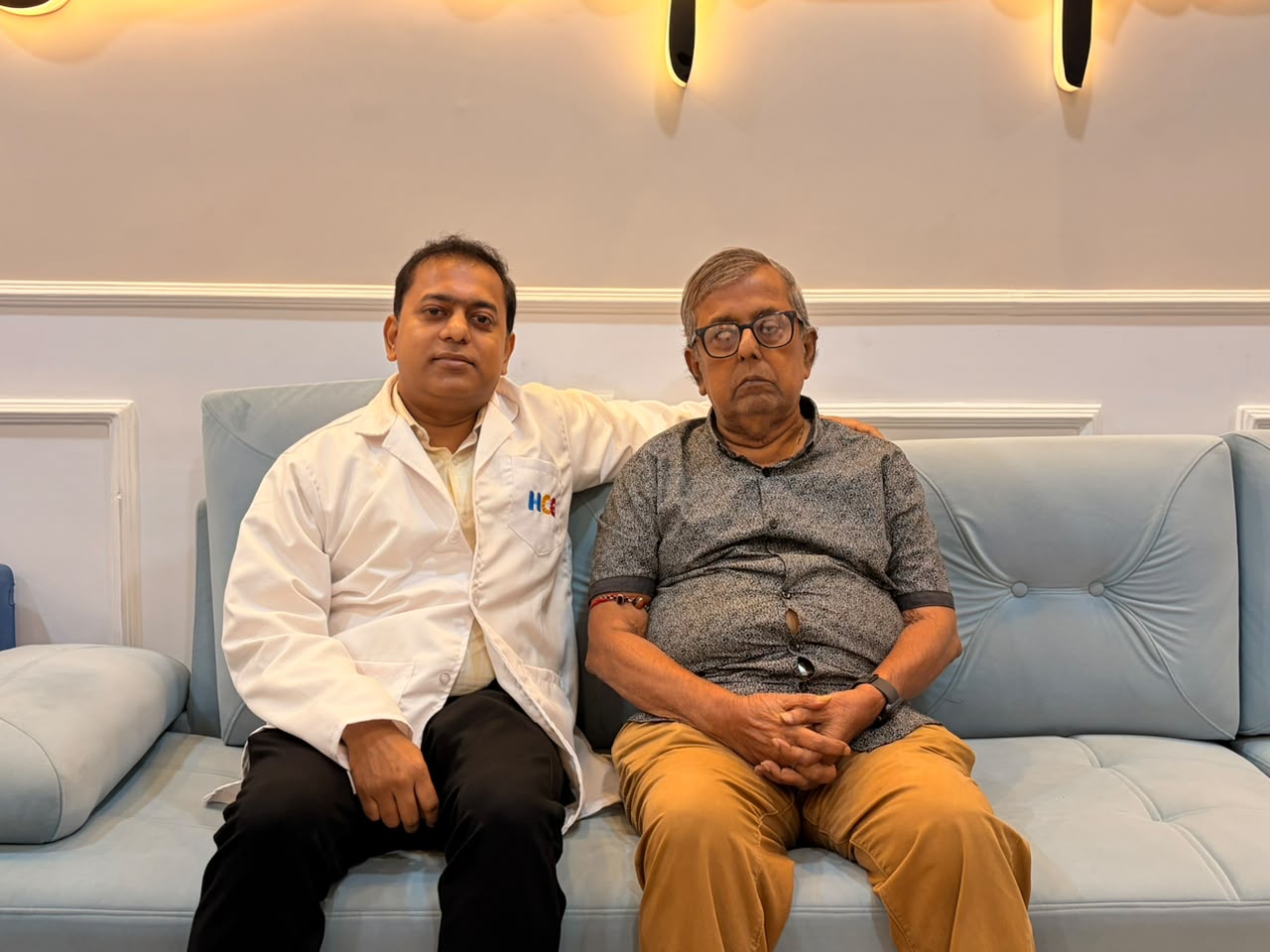
At 75, Malay Kumar Sarkar goes for morning walks and practises a little yoga every day — 21 years after being diagnosed with stage IV prostate cancer.
Over the years, his treatment has ranged from surgery and hormonal therapy to chemotherapy, radiotherapy and nuclear medicine, with doctors turning to different treatment options whenever the disease gained the upper hand. Sarkar has remained resolute, determined to keep fighting.
The north Calcutta resident retired in 2012 as a senior audit officer with the Accountant General, Bengal, and receives treatment under CGHS. He leads a normal life with his wife, a former Damodar Valley Corporation employee; their daughter lives in Sydney.
India had an estimated 40,071 new prostate cancer cases in 2024, according to the International Agency for Research on Cancer. Estimates for that year also ranked it second among cancers in Indian men aged 65 and above.
Following progression of the disease in 2025, Sarkar began lutetium-177 PSMA-targeted radioligand therapy, a nuclear medicine treatment that delivers radiation to PSMA-expressing cancer cells. Three of six planned doses have reduced bone disease, with PSA, a disease-monitoring marker, falling from around 1,000 to 0.65.
Orchiectomy (surgical castration) in 2005 reduced testosterone, which fuels prostate cancer. Hormonal therapy continued until 2012, followed by 13 chemotherapy cycles from 2013 and further hormonal treatment. Radiotherapy treated bone metastases in 2018–19 and the spine in 2025.
Dr Sanchayan Mandal, senior consultant, medical oncology, HCG Cancer Centre, Kolkata, has overseen his treatment since late 2023, using novel hormonal therapies, including abiraterone and enzalutamide, in different treatment sequences as the disease evolved. He has also prescribed denosumab to help prevent bone complications. “Fitness and functional ability, rather than age alone, guide our treatment choices,” he said.
“Mr Sarkar’s journey shows why continuity of care and access to evolving treatments matter. Our goal is to give patients more years and more life within those years,” said Dr Rupali Basu, Regional Business Head (East & AP), HCG Cancer Hospitals.

Leave a Reply